



Introduction
The smartphone industry is currently standing on the precipice of its most significant transformation since the introduction of the app store. For the past decade, the “smart” in smartphones has largely relied on cloud computing. When a user asks a voice assistant a question or translates a sentence, that data typically travels to a massive server farm, gets processed, and returns to the device. However, the latest developments in **AI Phone & Mobile Devices News** indicate a massive paradigm shift: the migration of Large Language Models (LLMs) and generative AI directly onto the silicon of mobile devices.
This transition from cloud-centric to edge-centric processing is not merely a technical nuance; it is a fundamental reimagining of user privacy, latency, and capability. With the advent of next-generation chipsets designed specifically to handle the immense computational load of models like Meta’s Llama 2, we are entering an era where your phone can draft emails, generate images, and act as a sophisticated digital concierge without ever connecting to the internet. This article explores the technical underpinnings of this shift, focusing on high-performance mobile processors, the integration of generative AI at the edge, and how this central hub influences the broader ecosystem of connected technology.
Section 1: The Silicon Renaissance and Generative AI
The Architecture of On-Device Intelligence
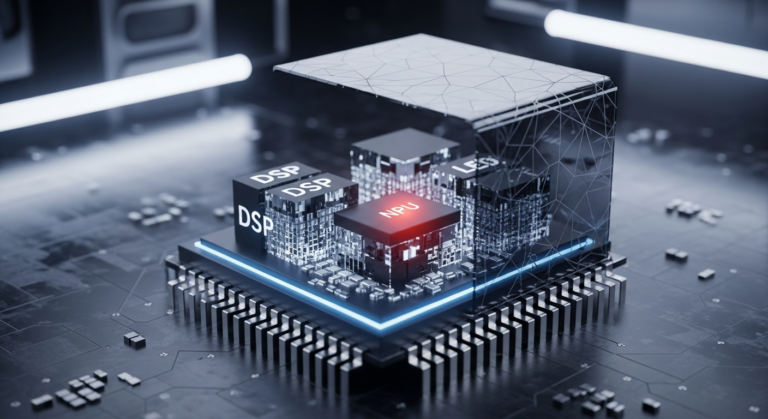
To understand why on-device generative AI is suddenly possible, we must look at the hardware. Historically, mobile processors were designed for burst performance—opening apps quickly or rendering gaming graphics. However, running Generative AI requires sustained, high-bandwidth computation. Recent breakthroughs in System-on-Chip (SoC) design, particularly from leaders in the semiconductor space, have introduced architectures capable of processing billions of parameters locally.
The latest flagship chipsets, such as the MediaTek Dimensity 9300 and its contemporaries, are moving away from traditional “big.LITTLE” configurations toward designs that utilize all high-performance cores. This brute force, combined with specialized Neural Processing Units (NPUs) or AI Processing Units (APUs), allows devices to run LLMs like Llama 2 (7-billion parameter models) efficiently. This hardware acceleration is critical because it reduces the “time to first token”—the delay between a user’s prompt and the AI’s response.
From Discriminative to Generative AI
For years, **AI Edge Devices News** has covered “discriminative” AI. This involves the phone identifying what is in a photo (a cat, a sunset) or recognizing a fingerprint. The new wave is “generative.” The hardware must now create new data, not just categorize existing data. This requires a significant leap in memory bandwidth and thermal management.
By leveraging partnerships with open-source model providers, chipset manufacturers are optimizing the software stack to run directly on the APU. This optimization includes quantization—reducing the precision of the model’s weights (e.g., from 16-bit floating point to 4-bit integer) to fit within the thermal and battery constraints of a mobile device without significantly sacrificing accuracy. This synergy between hardware architecture and software optimization is the cornerstone of the current mobile AI revolution.
The Role of Llama 2 and Open Source Models
The integration of Meta’s Llama 2 into the mobile ecosystem is a catalyst for this change. Unlike proprietary, closed-source models that require API calls to a paid server, Llama 2’s open nature allows silicon vendors to bake support directly into the Board Support Package (BSP) of the phone. This means developers can build apps that leverage a 70-billion or 7-billion parameter model residing on the phone, democratizing access to **AI Tools for Creators News** and productivity software.

Section 2: The Ecosystem Effect – The Phone as the AI Hub
The implications of a mobile device capable of running powerful AI models extend far beyond the phone itself. The smartphone is evolving into the central processing brain for a constellation of peripheral devices. Here is how on-device generative AI impacts various sectors.
Smart Home and IoT Integration
In the realm of **Smart Home AI News**, latency is the enemy. Waiting for a cloud server to process a command to turn on the lights creates friction. With an AI-enabled phone acting as a local edge server, commands are processed instantly. Furthermore, the phone can interpret complex, natural language commands and orchestrate **Smart Appliances News**. For example, a user could say, “I’m cooking a steak,” and the phone’s AI could simultaneously adjust the lighting via **AI Lighting Gadgets News** protocols and set the oven via connected kitchen interfaces, all without data leaving the local network.
This also extends to **Robotics Vacuum News**. Instead of the vacuum relying on its limited internal processor to map a room, it can offload complex object recognition tasks to the phone’s powerful NPU, allowing for better obstacle avoidance and cleaning strategies.
Wearables and Health Monitoring
The synergy between phones and wearables is deepening. **Wearables News** often highlights battery life as a limiting factor for watches and rings. By offloading the heavy AI lifting to the paired smartphone, wearables can remain lightweight while offering advanced insights. In the context of **Health & BioAI Gadgets News**, a phone running a local LLM can analyze weeks of biometric data from a smartwatch to provide personalized health summaries, detect anomalies in sleep patterns (relevant to **AI Sleep / Wellness Gadgets News**), and suggest lifestyle changes, ensuring sensitive health data remains private.
Augmented Reality and Vision
For **AR/VR AI Gadgets News** and **Smart Glasses News**, the mobile phone is the tethered powerhouse. Smart glasses require real-time object recognition and translation. On-device AI allows a user wearing smart glasses to look at a menu in a foreign language and see an instant translation overlay, or look at a landmark and hear a generated history lesson via **AI Audio / Speakers News** integration. This requires the ultra-low latency that only edge computing can provide.
Content Creation and Accessibility
The creator economy stands to benefit immensely. **AI-enabled Cameras & Vision News** suggests that future phones will not just take photos but generate elements within them. A user could ask their phone to “remove the tourists from the background and change the sky to sunset,” and the on-device chip would perform this generative fill instantly. Similarly, for **AI for Accessibility Devices News**, on-device AI can provide real-time, internet-free audio descriptions of the world for the visually impaired, processing visual data from the camera feed into descriptive speech with zero lag.
Section 3: Practical Applications and Industry Verticals
The deployment of powerful generative AI on mobile devices influences niche markets and industrial applications significantly.
Robotics and Drones
In **Robotics News** and **Drones & AI News**, the mobile device often acts as the controller and compute unit. A drone capturing video footage can stream it to the phone, where the NPU analyzes the feed for specific subjects—such as search and rescue targets—in real-time. This is vital in remote areas where cloud connectivity is non-existent. Similarly, **AI Personal Robots News** suggests that companion robots will rely on the user’s phone to update their learning models and personalize interactions.
Education and Office Productivity
The impact on **AI Education Gadgets News** is profound. Students in remote areas with poor internet connectivity can utilize AI tutors running locally on their tablets or phones. These AI tutors can explain complex math problems or check grammar without needing a data plan. In the corporate world, **AI Office Devices News** is shifting toward secure, on-device meeting summarization. A phone sitting on a conference table can transcribe and summarize a sensitive meeting without recording the audio to a third-party cloud, satisfying strict corporate security compliance.
Specialized IoT: From Farming to Fitness
The versatility of these chips extends to **AI Gardening / Farming Gadgets News**. A farmer could take a picture of a crop leaf, and the phone’s AI could instantly diagnose a disease and suggest treatments based on a locally stored agricultural database. In the gym, **AI Fitness Devices News** is evolving; your phone camera could track your form during a squat and offer real-time, generative voice feedback on how to correct your posture, acting as a virtual personal trainer.
Security and Monitoring
**AI Security Gadgets News** and **AI Monitoring Devices News** are moving toward edge processing to reduce bandwidth costs. Instead of streaming 24/7 video to the cloud, cameras can use the phone’s processing power to filter false positives, alerting users only when a genuine threat is detected. This also applies to **AI Sensors & IoT News**, where thousands of data points from home sensors are aggregated and analyzed locally to detect patterns indicative of leaks or electrical faults (relevant to **AI for Energy / Utilities Gadgets News**).
Section 4: Strategic Implications, Pros, and Cons
The Privacy Advantage
The strongest argument for on-device AI is privacy. When **AI Assistants News** involves processing personal calendars, emails, and health data, users are increasingly wary of cloud storage. On-device processing ensures that the data never leaves the user’s possession. This is a critical selling point for **AI Pet Tech News** (monitoring inside the home) and **AI Toys & Entertainment Gadgets News** (protecting children’s data).
Performance vs. Efficiency
However, this shift brings challenges. Running a model like Llama 2 requires significant energy.
- Battery Life: The intense computation of generative AI can drain batteries rapidly. Manufacturers must balance performance with power efficiency, often utilizing **AI for Energy / Utilities Gadgets News** concepts within the phone’s own power management ICs.
- Thermal Throttling: High-performance NPUs generate heat. Without active cooling, phones may throttle performance during sustained AI tasks, such as rendering video or long gaming sessions covered in **AI in Gaming Gadgets News**.
- Storage: Storing LLMs takes space. A 7-billion parameter model can take up several gigabytes. This will likely push the base storage standard of flagship phones higher.
The Future of Connected Infrastructure
Looking forward, the mobile device will interface with **Smart City / Infrastructure AI Gadgets News** and **Autonomous Vehicles News**. As you walk through a smart city, your phone could negotiate with traffic lights or public transport beacons. When entering a vehicle, the phone could hand off navigation and entertainment preferences to the car’s system seamlessly. Even **AI Research / Prototypes News** suggests **Neural Interfaces News** will eventually link directly to mobile processors, allowing thought-based control of digital environments.
Conclusion
The integration of Llama 2 and high-performance generative AI capabilities into mobile chipsets like the Dimensity 9300 represents a watershed moment in consumer technology. We are moving away from a dumb terminal model, where the phone is merely a window to the cloud, toward a model of true edge intelligence. This shift will empower a new generation of applications across **AI Phone & Mobile Devices News**, from **AI in Fashion / Wearable Tech News** to **AI for Travel Gadgets News**.
While challenges regarding battery life and thermal management remain, the benefits of privacy, reduced latency, and offline capability are undeniable. As developers begin to harness these on-device capabilities, the smartphone will cement its position not just as a communication device, but as the indispensable, intelligent core of our digital lives.