
I spent last weekend analyzing the network traffic coming off my daily-driver smart glasses. What I found actually annoyed me. We keep buying these sleek frames under the assumption that the onboard neural chips are doing the heavy lifting. But that’s not the case.
I do like my smart frames — I wear them on dog walks to listen to podcasts without blocking my ears, and the ability to ask the AI what kind of tree I’m looking at is genuinely fun. But the marketing departments at these massive tech companies have done a spectacular job of convincing us that “multimodal AI” means a hyper-intelligent local processor is analyzing our world in real-time.
The reality, though, is much messier — and frankly, a massive privacy blind spot.
The Wireshark Reality Check
Something felt off to me after the v6.12 firmware update that dropped in late January. My battery life tanked, and the frames felt physically warmer against my temples when I used the vision features. So, I routed the hardware through my Ubiquiti UDM Pro (running firmware v3.2.9) and fired up Wireshark to see exactly what was leaving my local network.
I expected to see small, compressed tensor arrays or lightweight metadata being passed to the cloud. You know, the actual output of on-device processing. Nope.
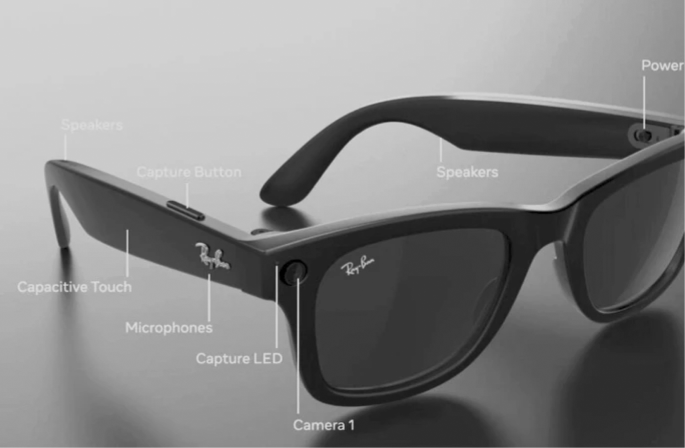
When you trigger the assistant to “look” at something, it doesn’t just send a mathematical representation of your view. It ships a burst of raw, high-resolution video and uncompressed audio straight to external servers. During a 40-minute test where I only asked the assistant three basic visual questions, I logged 68MB of background upload traffic. That’s a massive amount of data for a device that supposedly processes things “intelligently.”
Who is Actually Looking at Your POV?
Here’s where the whole system gets incredibly sketchy. We assume this raw footage hits a server, gets ingested by an LLM, and is immediately discarded. But that’s not how you train the next generation of multimodal models.
These algorithms are desperately hungry for real-world, first-person training data. To get better at identifying objects, reading text at weird angles, or understanding context, the AI needs human reinforcement learning.
What this means in practice is that massive annotation centers — mostly outsourced to contractors in places like Nairobi or Manila — are reviewing chunks of our POV footage. The tech giants claim this data is “anonymized.” But let’s be serious for a second. How do you anonymize a camera strapped to my face that captures my living room, my kids playing, the mail sitting on my counter, and the reflection of my laptop screen in the window?
The Screen-Scraping Gotcha
I decided to test an edge case that honestly made me put the glasses back in their charging case for the rest of the week.
I sat at my desk with a dummy AWS API key clearly visible on my secondary monitor. I looked slightly to the left at a coffee mug and asked the assistant what color the mug was. It answered correctly. But when I checked the network logs, the burst of frames captured during that interaction easily had the resolution and wide-angle field of view to include my monitor.
If that frame gets flagged for random quality assurance review by a human contractor half a world away, my API key is just sitting there in plain text. The same goes for bank statements on your kitchen island or passwords written on a sticky note. The hardware doesn’t know what it shouldn’t look at before it hits the upload button.
The Hardware Bottleneck
Why is this happening? Because mobile silicon just isn’t there yet.

Current wearable processors can handle wake words and basic audio routing locally. But running a complex visual-language model requires serious compute and memory bandwidth that would melt a plastic frame and drain a 150mAh battery in four minutes.
I don’t expect true, fully local on-device multimodal processing to hit consumer spectacles until at least Q4 2027, when the next generation of 2nm silicon actually scales down enough to manage the thermal load. Until then, these devices are essentially just glorified GoPros livestreaming your life to a remote server farm under the guise of “AI.”
And look, the tech is impressive. I’m not denying that having a hands-free assistant that can see what you see is incredibly useful. But we need to stop pretending it’s magic. It’s just a camera, an internet connection, and a massive, invisible workforce of human labelers trying to teach a machine how to see.
If you’re wearing these things around your house, do yourself a favor: take them off before you open your laptop.