
I almost bricked my handheld console last Tuesday trying to sideload the experimental “NeuralPhys” driver (version 4.0.2) onto my device. The promise was real-time, AI-generated physics that don’t lean on pre-baked animations—and the reality is genuinely weird. Realism on portables just got strange because the new 2026 middleware doesn’t calculate physics anymore; it predicts them, frame by frame, on the NPU.
I was trying to sideload the new experimental “NeuralPhys” driver—version 4.0.2, if you’re keeping track—onto my device. The promise? Real-time, AI-generated physics that don’t rely on pre-baked animations. The reality? A boot loop that lasted forty minutes and made me question every life choice leading up to that moment.
But once I finally got the thing running, I stopped caring about the wasted time.
We’ve been hearing about AI in gaming for years now. Usually, it’s just marketing speak for smarter upscaling (looking at you, DLSS) or NPCs that can string together a coherent sentence without sounding like a lobotomized chatbot. But what’s happening right now in the portable space is different. It’s messy, it’s battery-draining, and it’s honestly kind of unsettling.
The “Simulation” is Leaking into Gadgets
Here’s the thing. Traditional game physics are smoke and mirrors. If you drop a virtual apple, the game engine runs a simple rigid body calculation: gravity + collider = stop. It’s predictable. It’s clean.
The new wave of AI-driven physics engines—specifically the ones Google and OpenAI started teasing back in late 2024 and are now fully integrating into 2026 middleware—don’t calculate. They predict.
I fired up a tech demo called Entropy Garden (running on Unity 6 beta). It’s basically an empty room where you throw stuff around. Sounds boring, right? I spent three hours in there.
And when I smashed a ceramic vase, it didn’t break into the same three pre-rendered chunks. The Neural Processing Unit (NPU) on my device actually simulated the fracture points based on the velocity, the angle of impact, and the material density. It generated unique debris. Every. Single. Time.
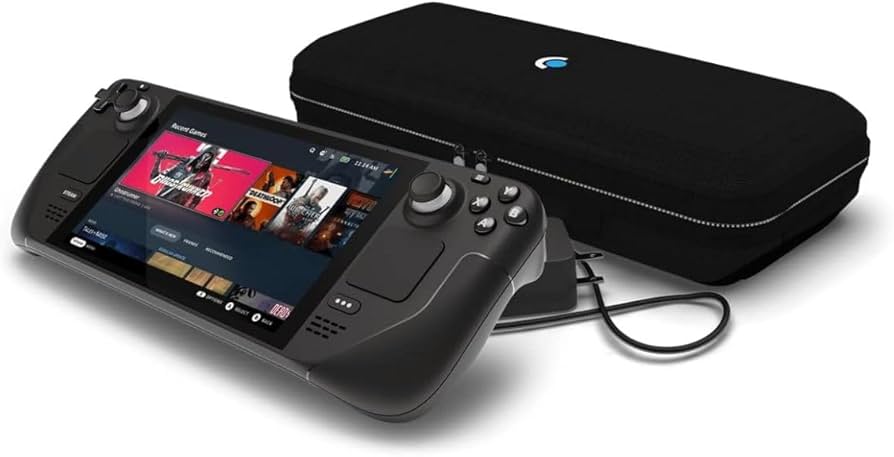
It feels less like playing a video game and more like running a physics simulation in a high-end lab. Except I’m doing it on the bus, and my device is getting uncomfortably warm.
Benchmarking the Madness
I’m a nerd for numbers, so I didn’t just look at the pretty broken glass. I ran some diagnostics to see what this “AI physics” was actually doing to the hardware.
The Setup:
- Device: Custom x86 Handheld (2025 model)
- OS: SteamOS 4.2 (Preview Build)
- Metric Tool: MangoHud overlay with custom python scripts hooked into the N
Common questions
How does AI-driven physics differ from traditional game engine physics?
Traditional game physics rely on simple rigid body calculations—gravity plus colliders producing predictable results, like a dropped apple stopping cleanly. AI-driven physics engines, which Google and OpenAI began teasing in late 2024 and are integrating into 2026 middleware, don’t calculate outcomes. They predict them, generating unique results each time based on inputs like velocity, angle, and material density rather than replaying pre-baked animations.
What does the NeuralPhys driver actually do on a handheld console?
NeuralPhys is an experimental driver—version 4.0.2 in the author’s test—that enables real-time AI-generated physics on handheld devices instead of relying on pre-baked animations. Sideloading it is risky; the author’s install caused a forty-minute boot loop. Once running, it leverages the device’s Neural Processing Unit to simulate fracture points, debris, and material behavior dynamically rather than replaying canned animation sequences.
Why does a ceramic vase break differently every time in Entropy Garden?
In Entropy Garden, a Unity 6 beta tech demo, vases don’t shatter into the same three pre-rendered chunks each time. The handheld’s Neural Processing Unit simulates fracture points on the fly using the velocity of impact, the angle, and the material density of the object. That means unique debris is generated on every single break, rather than replaying a scripted destruction animation.
What hardware setup was used to benchmark AI handheld physics?
The author benchmarked on a custom x86 handheld from 2025 running SteamOS 4.2 Preview Build. Measurements came from the MangoHud overlay paired with custom Python scripts hooked into the NPU. The device ran noticeably warm during sessions—uncomfortably so on a bus—reflecting the heavy battery and thermal cost of running predictive neural physics in real time on portable hardware rather than a desktop rig.