



Introduction: The Evolution of Intelligent Floor Care
The landscape of home maintenance is undergoing a seismic shift, driven by rapid advancements in artificial intelligence and mechanical engineering. For years, the standard for floor care was a dichotomy: you vacuumed the dust, and then, separately, you mopped the grime. However, recent developments in Robotics Vacuum News indicate that this separation is becoming a thing of the past. The industry is witnessing the rise of “ultra-intelligent” cleaning solutions that merge high-suction vacuuming with active wet mopping in a single pass, fundamentally changing how we approach household hygiene.
This evolution is not merely about attaching a wet cloth to a suction motor. It involves complex sensor fusion, adaptive algorithms, and hardware miniaturization that rivals the innovation seen in Smart Home AI News. Whether manifested in autonomous roaming robots or next-generation handheld devices, the goal is identical: to simplify life through engineering. As consumers demand more efficiency, manufacturers are responding with devices that can tackle wet and dry messes simultaneously, eliminating the need for multiple tools and significantly reducing cleaning time.
In this comprehensive analysis, we will explore the technology behind these wet/dry hybrids, the role of AI in optimizing cleaning paths, and how these devices fit into the broader ecosystem of connected gadgets—from AI Assistants News to the latest in Smart Appliances News.
Section 1: The Engineering Behind Wet/Dry Hybridization
The Multi-Roller Revolution
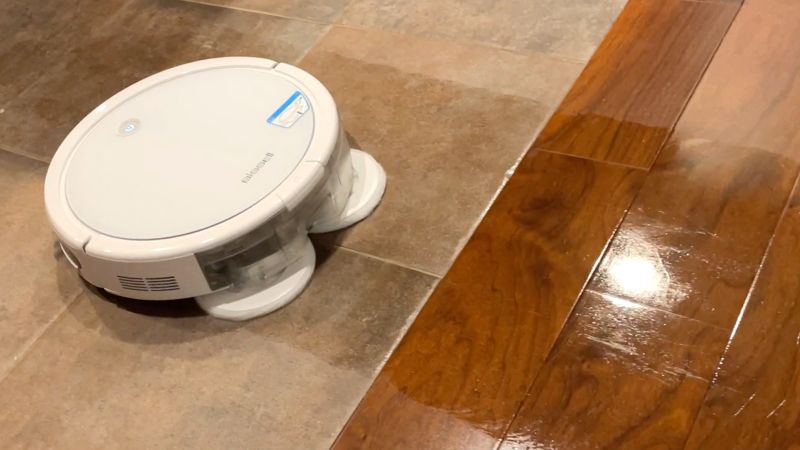
One of the most significant breakthroughs discussed in recent Robotics Vacuum News is the shift from static mopping pads to active, multi-roller systems. Traditional robot mops often dragged a damp cloth across the floor, which was effective for light dust but failed against sticky spills or heavy debris. The new generation of devices—both autonomous and handheld—utilizes counter-rotating rollers.
These rollers serve a dual purpose. First, they agitate the floor surface to scrub away dried stains, a mechanism similar to industrial floor cleaners but scaled down for the home. Second, they act as a conveyor belt for debris, lifting wet and dry mess into the suction channel simultaneously. This requires precise engineering to ensure that water does not enter the vacuum motor, a challenge that has been solved through advanced air-water separation technologies.
Adaptive Suction and Water Flow
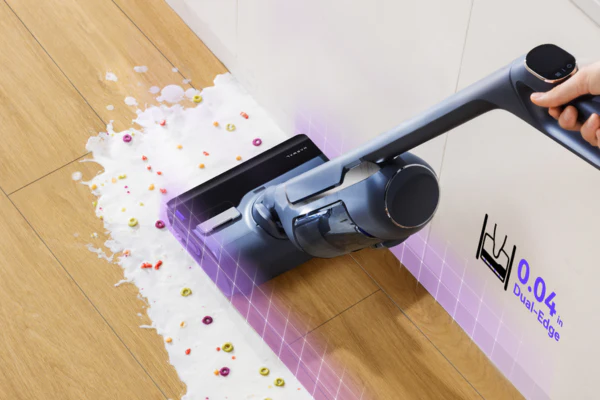
Modern cleaning devices are no longer “dumb” appliances that run at a single speed. Leveraging sensors similar to those found in AI Sensors & IoT News, these machines can detect the density of the debris and the opacity of the water being sucked up. When a device encounters a spilled bowl of cereal and milk, for example, it instantly ramps up suction power and adjusts water flow to dilute the mess without flooding the floor.
This adaptability is crucial for energy efficiency. Much like the innovations covered in AI for Energy / Utilities Gadgets News, these vacuums optimize their battery usage by only expending maximum power when necessary. This extends the runtime of cordless units, allowing them to clean larger surface areas on a single charge.
The Self-Cleaning Dock: A Critical Component
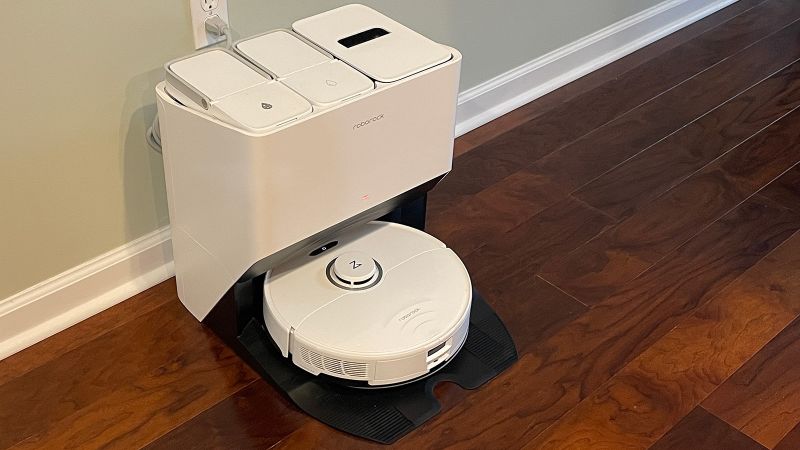
Perhaps the most “intelligent” aspect of modern wet/dry vacuums is what happens after the cleaning is done. The latest trend in Robotics News highlights the importance of the base station. No user wants to clean a dirty mop roller by hand. Consequently, manufacturers have developed docks that flush the rollers with fresh water, scrape off debris, and, crucially, dry the system with hot air.
This drying phase is essential for preventing mold and odors, addressing health concerns often discussed in Health & BioAI Gadgets News. By automating the maintenance of the machine itself, the technology ensures that the device is always ready for the next task without becoming a biohazard itself.
Section 2: The Brains of the Operation – AI and Navigation
Sensor Fusion and Object Recognition
The distinction between a standard appliance and a robot lies in its ability to perceive its environment. Drawing parallels from Autonomous Vehicles News, modern floor cleaners utilize LiDAR (Light Detection and Ranging) and vSLAM (Visual Simultaneous Localization and Mapping) to navigate complex home environments. However, the stakes are higher for wet/dry models.
If a standard vacuum runs over a carpet, it cleans it. If a wet/dry unit runs over a carpet while in mopping mode, it ruins it. Therefore, these devices employ ultrasonic sensors to detect flooring types instantly. When carpet is detected, the AI makes a split-second decision: lift the mop attachment (if capable) or treat the area as a “no-go zone.” This level of discrimination is a hot topic in AI-enabled Cameras & Vision News, where visual data is processed on the edge to identify obstacles like shoes, cables, and even pet waste.
AI-Driven Path Planning
Random bouncing is obsolete. Today’s devices map the home and plan the most efficient route. This involves algorithms that resemble those seen in Drones & AI News, calculating trajectories that maximize coverage while minimizing overlap. For handheld wet/dry units, the “AI” often assists the user by providing traction. The rollers pull the vacuum forward, and sensors detect the user’s intent—if you pull back, the motors reverse torque to assist the movement, making a heavy device feel weightless.
This focus on ergonomics and user assistance connects with AI for Accessibility Devices News. By reducing the physical strain required to push a vacuum and mop, these high-tech tools make home maintenance accessible to elderly users or those with limited mobility.
Integration with the Smart Home
A robotic vacuum is rarely an island. It is part of a connected ecosystem. Through integration with platforms covered in AI Assistants News (like Alexa, Google Home, or Siri), users can command their devices vocally. “Clean the kitchen” is no longer a request to a family member but a command to a robot.
Furthermore, we are seeing cross-device communication. Imagine a scenario involving AI Kitchen Gadgets News: your smart oven detects a spill during cooking. Theoretically, it could signal the robot mop to standby near the kitchen. While we aren’t quite there yet, the protocols discussed in AI Edge Devices News suggest this level of interoperability is on the horizon.
Section 3: Handheld vs. Autonomous – The Form Factor War
The Case for the Intelligent Handheld
While robots are autonomous, they lack the agility of a human operator. This is where the new wave of intelligent handheld wet/dry vacuums shines. These devices, often resembling bulky stick vacuums, offer “edge-to-edge” cleaning that robots sometimes miss. They are the focus of much Smart Appliances News because they bridge the gap between deep cleaning and convenience.
For example, a robot might struggle with a massive spill of viscous liquid or a pile of wet leaves in a mudroom. A handheld unit, empowered by high-torque motors and smart dirt detection, allows the user to target specific messes with precision. This mirrors the trends in AI Tools for Creators News—giving the human operator enhanced capabilities rather than replacing them entirely.
The Case for the Robot
Robots offer the ultimate luxury: time. For daily maintenance, an autonomous unit that vacuums and mops while the homeowner is at work is unbeatable. Innovations in AI Personal Robots News suggest that these devices are becoming more companion-like, learning the household’s schedule. If you work from home, the robot learns your office hours and avoids that room, a feature relevant to AI Office Devices News.
Hybrid Usage Scenarios
The ideal modern home likely employs both. A robot for daily maintenance and an intelligent handheld for spot cleaning and deep scrubs. This dual-device strategy is becoming common, driving sales in the sector. It also opens up discussions found in AI Monitoring Devices News, where the robot acts as a mobile security camera while cleaning, checking for intruders or open windows.
Section 4: Implications, Challenges, and Future Trends
Privacy and Data Security
With cameras and microphones entering the vacuum (for voice control and obstacle avoidance), privacy is a major concern. AI Security Gadgets News frequently covers the risks of IoT devices. A vacuum that maps your home knows the layout, the furniture, and potentially your schedule. Manufacturers must ensure that this data is processed locally (Edge AI) rather than sent to the cloud. This is a critical differentiator in premium models.
Battery Technology and Sustainability
The push for cordless freedom requires advancements in battery density. AI for Energy / Utilities Gadgets News is relevant here, as smart charging algorithms help preserve battery health over years of use. Furthermore, the industry is facing pressure to make these devices repairable. A disposable robot is an environmental disaster; a modular one is a sustainable appliance.
Unexpected Intersections
The technology developed for these vacuums ripples out into other industries:
- AI Pet Tech News: Vacuums now feature “pet modes” that are quieter to avoid scaring animals, or cameras that allow owners to check on pets.
- AI Sleep / Wellness Gadgets News: Quieter motors and “Do Not Disturb” scheduling ensure cleaning doesn’t disrupt sleep cycles.
- AI Gardening / Farming Gadgets News: The SLAM algorithms used in vacuums are directly applicable to autonomous lawn mowers and agricultural weeding robots.
- Wearables News: Future integrations could see smartwatches notifying users when the vacuum is stuck or the water tank is empty.
- AR/VR AI Gadgets News: Imagine using an AR headset to “paint” virtual walls that the robot vacuum cannot cross, replacing physical magnetic strips.
The Future: Beyond the Floor
We are approaching a point where “Robotics Vacuum News” will simply be “Home Robotics News.” The distinction is blurring. Prototypes discussed in AI Research / Prototypes News show robots that can climb stairs or manipulate objects with arms. While current consumer tech is focused on the floor, the sensors and AI brains being perfected today are the foundation for the general-purpose butler robots of tomorrow.
Even industries like AI in Fashion / Wearable Tech News are tangentially related, as the materials science used to create durable, self-cleaning brushes and filters often overlaps with textile innovation. Similarly, AI Lighting Gadgets News intersects with vacuuming, as robots can now signal smart bulbs to turn on in dark rooms to improve camera visibility for navigation.
Practical Considerations for Consumers
When evaluating these new wet/dry ultra-intelligent devices, consumers should look beyond the marketing hype. Here are key factors to consider:
- Edge Cleaning: Does the roller extend to the very edge of the casing? If not, you will leave a dirty strip along every baseboard.
- Self-Cleaning Efficiency: Does the dock actually dry the roller? Without hot air drying, a wet/dry vacuum will smell like a swamp within a week.
- Weight and Propulsion: These units are heavy due to water tanks. Look for active traction assistance (AI-driven wheels) to prevent wrist strain.
- Maintenance Costs: Check the price of replacement filters and rollers. AI for Accessibility Devices News often highlights that high maintenance requirements can make a device unusable for some demographics.
- App Connectivity: A buggy app can ruin a great robot. Look for software stability updates.
Conclusion
The realm of Robotics Vacuum News has expanded far beyond simple dust-busting. We are witnessing the maturation of the “complete floor cleaning package”—devices that handle wet and dry messes with a level of intelligence previously reserved for science fiction. Whether it is a handheld unit like the latest innovations in the market that tackle spills and stains in one go, or an autonomous rover that navigates your home with the precision of a self-driving car, the technology is undeniably impressive.
By integrating technologies from AI Sensors & IoT News, AI Cameras News, and even Neural Interfaces News (in the distant future of thought-controlled appliances), manufacturers are creating a seamless ecosystem of hygiene. These devices are not just tools; they are active participants in the management of the home. As AI continues to evolve, we can expect these machines to become even more proactive, efficient, and indispensable.
The convergence of wet/dry capabilities with advanced AI signifies a pivotal moment in home appliances. It represents a move away from single-function tools toward multi-faceted, intelligent companions that genuinely simplify life. For the consumer, this means cleaner floors, less effort, and more time to focus on what truly matters.