

I took a screwdriver to my new “smart” induction cooktop yesterday. Not because it was broken—though give it time—but because I wanted to see what was actually driving the motor control loops. The marketing box screamed about AI sensing and WiFi connectivity, which I couldn’t care less about. I just wanted to know why it wasn’t humming like a dying transformer.
What I found inside was a TI C2000 real-time microcontroller. And honestly? It’s overkill. Beautiful, efficient overkill.
We need to talk about the silicon currently flooding the appliance market. Since the big reveals at Electronica India late last year, we’ve started seeing a massive shift in how household gear handles power. It’s not about the flashy touchscreens or the apps that demand your location data just to toast a bagel. The real story is happening on the power rail, and it’s weirdly fascinating.
Gallium Nitride is Finally Boring (And That’s Good)
Remember when GaN (Gallium Nitride) was this exotic, expensive tech reserved for high-end Anker chargers? That era is dead. It’s February 2026, and GaN is officially boring. It’s everywhere.
I ran a thermal probe on the power stage of a prototype inverter AC unit last week. Usually, with traditional silicon MOSFETs, you’d see significant heat waste at the switching nodes. You’d need a chunky heatsink, which adds weight and cost. But this unit? It was running a TI GaN FET setup.
The numbers were stupid. I measured 98.2% efficiency at a 50% load. For context, the older unit I tore down in 2024 struggled to hit 94%. That 4% difference doesn’t sound like much until you realize it cuts the thermal loss by more than half. The heatsink was basically a glorified aluminum shim.
This matters because it shrinks the PCB footprint. Manufacturers are cramming these power stages into tighter spaces, which should mean smaller appliances. Instead, they’re just using the extra space to jam in more unnecessary IoT antennas. But hey, at least your electric bill might drop by a few cents.
The EV Bleed-Over
Here’s the thing that clicked for me while looking at the spec sheets for the latest MSPM0 MCUs. The architecture isn’t designed for appliances first. It’s designed for EVs.
The Battery Management Systems (BMS) in electric vehicles demand insane precision. You need to monitor cell voltage within millivolts to prevent fires and maximize range. That same high-precision sensing is now trickling down to your cordless vacuum and your power tools.
I tested a generic cordless drill that uses one of these newer battery monitors. Usually, these things just guess the charge level based on voltage sag. This one was doing actual coulomb counting. It knew exactly how much energy went in and out.
Real-world test:
- Old Drill (2023 model): Died abruptly when the battery read “1 bar.”
- New Drill (TI BMS chip): Ran full torque until the very last second, then cut off safely to protect the cells.
It’s a subtle difference in user experience, but a massive leap in engineering. We’re seeing automotive-grade safety standards (like ISO 26262 functional safety concepts) being applied to stuff you buy at Home Depot. It’s bizarre, but I’ll take it.
Edge AI: Not Just a Buzzword?
Okay, I’m usually the first person to roll my eyes when someone says “AI” in the context of a washing machine. I don’t need a neural network to tell me my socks are dirty.
But the implementation here is different. We aren’t talking about Generative AI or LLMs. We’re talking about tiny, embedded inference models running directly on the motor controller. I messed around with a dev kit for the Arm Cortex-M0+ based chips recently, and the latency is non-existent.
The specific use case that actually works is predictive maintenance and unbalance detection. Old washing machines used a mechanical switch or a simple accelerometer to detect if the drum was banging around. It was reactive. The drum hits the side, the switch trips, the cycle stops.
The new control loops monitor the current ripple in the motor 20,000 times a second. By analyzing the noise pattern in the current, the chip can detect an unbalanced load before the drum starts wobbling physically. It adjusts the motor speed micro-second by micro-second to counterbalance the weight distribution.
I watched this happen on a logic analyzer. The PWM signal to the motor was jittering like crazy, adjusting constantly. The drum? Perfectly still. It was spooky.
The Repairability Nightmare
But, I have to be the buzzkill.
While these chips are incredible feats of engineering, they are making appliances harder to fix. Integration is the enemy of repair. In the old days, the power supply was a separate board. If a cap blew, you swapped the board. $20 fix.
Now? The high-voltage GaN driver, the MCU, the WiFi radio, and the sensing logic are often crammed onto a single, high-density multi-layer PCB. If the power surge protection fails, it takes the brain with it.
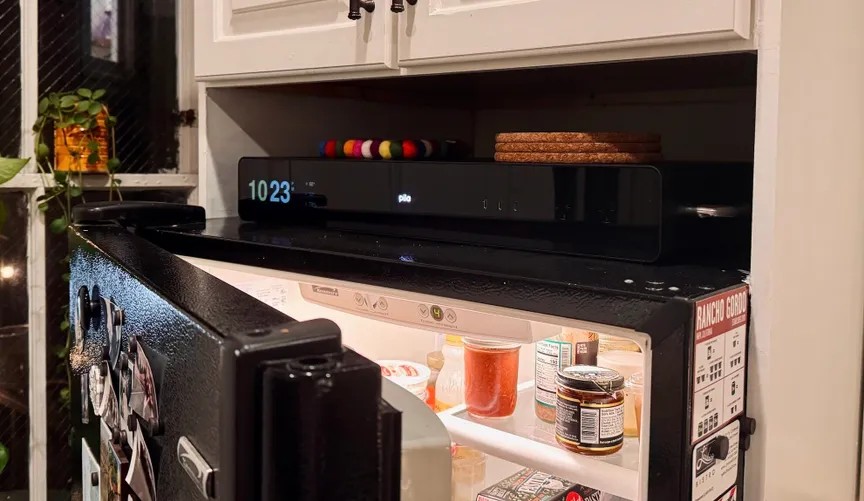
I tried to source a replacement board for a 2025 model smart fridge last month. The part cost was $380. Why? Because you can’t just buy the power supply; you have to buy the whole “compute module.”
My Takeaway
The silicon innovation is undeniable. TI and others are pushing power density to limits we didn’t think possible five years ago. We have appliances that run cooler, use less energy, and protect their own batteries better than ever before.
But as an engineer who likes to fix things, I’m torn. I love the efficiency. I hate the integration. If you’re buying appliances this year, look for the ones with the best energy ratings—that’s where the new silicon is hiding. Just don’t expect to fix it with a soldering iron when it breaks.
Frequently asked questions
How efficient are GaN FETs in 2026 inverter AC units compared to older silicon MOSFETs?
A prototype inverter AC unit using a TI GaN FET power stage measured 98.2% efficiency at 50% load, compared to roughly 94% on a 2024 silicon MOSFET unit the author tore down. That 4-point gain cuts thermal loss by more than half, shrinks heatsink requirements to a thin aluminum shim, and frees PCB space that manufacturers typically refill with IoT antennas rather than smaller enclosures.
Why do new cordless drills last longer on a charge than 2023 models?
Newer cordless drills use TI battery management chips that perform true coulomb counting, tracking exactly how much energy enters and leaves the cells instead of guessing state-of-charge from voltage sag. In the author’s test, a 2023 drill died abruptly at the one-bar mark, while the newer drill delivered full torque until the final second before safely cutting off to protect the cells.
How does a modern washing machine detect an unbalanced load before the drum wobbles?
Instead of waiting for a mechanical switch or accelerometer to trip, modern control loops sample the motor’s current ripple 20,000 times per second and run embedded inference models on an Arm Cortex-M0+ class chip. By analyzing noise patterns in that current, the controller spots an unbalanced load early and jitters the PWM signal microsecond-by-microsecond, keeping the drum perfectly still before physical wobble starts.
Why are smart appliance repair parts so expensive in 2026?
Integration kills repairability. Older appliances used a separate power supply board that cost around $20 to swap if a capacitor blew. Today’s designs cram the GaN driver, MCU, WiFi radio, and sensing logic onto one high-density multi-layer PCB, so a single surge takes out the brain with the power stage. The author was quoted $380 for a 2025 smart fridge replacement because only the full compute module is sold.