




Introduction: The New Frontier of Digital Observation
We are currently witnessing a paradigm shift in personal computing, moving from the screens in our palms to the lenses over our eyes. As Smart Glasses News continues to dominate headlines, the technology sector is grappling with a profound transformation in how we interact with the world and capture information. The era of bulky, cyborg-like headsets is fading, replaced by sleek, fashionable frames that are indistinguishable from standard eyewear. However, this miniaturization of technology brings with it a complex set of challenges regarding privacy, consent, and the very nature of public anonymity.
The integration of high-definition cameras, microphones, and artificial intelligence into everyday accessories has sparked a technological arms race. On one side, we have the rapid advancement of Wearables News, offering users unprecedented convenience, memory augmentation, and connectivity. On the other side, a growing movement of privacy advocates and security researchers is developing countermeasures to detect and neutralize these surveillance tools. This article delves deep into the ecosystem of smart eyewear, exploring the mechanics of these devices, the emerging technologies designed to detect them, and the broader implications for a society where every glance could be a recording.
The Evolution of the Connected Gaze
From Novelty to Necessity
The journey of smart eyewear has been tumultuous. Early iterations were criticized for their awkward aesthetics and limited battery life. However, recent developments in AI in Fashion / Wearable Tech News suggest that the industry has cracked the code: make the technology invisible. Modern smart glasses are designed to look like classic wayfarers or aviators, hiding powerful processors and sensors within the stems. This shift is crucial for adoption but problematic for privacy, as the visual cues that once signaled “I am recording” are disappearing.
These devices serve as the ultimate edge computing platforms. They are no longer just cameras; they are AI Edge Devices News staples, processing visual data locally to identify objects, translate text in real-time, and provide turn-by-turn navigation. The convergence of AI Phone & Mobile Devices News with eyewear means that the glasses act as a seamless extension of the smartphone, reducing friction and increasing the frequency of digital capture.
The Hardware Ecosystem
To understand the privacy concerns, one must understand the hardware. High-end smart glasses typically utilize a combination of RGB cameras for photography and monochrome sensors for depth perception and motion tracking. This mirrors technology found in Robotics News and Autonomous Vehicles News, where visual odometry is used to map environments. In the context of glasses, these sensors are often paired with an LED indicator light designed to alert bystanders that recording is in progress. However, hackers and privacy activists have long pointed out that these indicators can be taped over or physically disabled, rendering the “safety feature” moot.
Furthermore, the integration of audio is equally sophisticated. AI Audio / Speakers News highlights the use of open-ear audio and beamforming microphones in these frames. This allows the wearer to capture spatial audio with startling clarity, often picking up conversations from a distance that a standard smartphone microphone might miss. This capability blurs the line between a personal memory aid and a spy gadget.
The Counter-Surveillance Movement: Detecting the Watchers
The Physics of Detection
![Hybrid cloud architecture diagram - Healthcare hybrid cloud architecture [7] | Download Scientific Diagram](https://aigadget-news.com/wp-content/uploads/2025/12/inline_3d9f84fa.jpg)
As smart glasses become ubiquitous, a niche but significant market for counter-surveillance technology is emerging, often covered in AI Security Gadgets News. The premise is simple: if a device is emitting a signal or capturing light, it can be detected. One of the primary methods for identifying hidden cameras in smart glasses involves detecting the infrared (IR) signatures used for autofocus or low-light sensing. Just as AI Sensors & IoT News covers the proliferation of sensors in smart homes, it also covers the tools used to sniff them out.
Cameras function by focusing light onto a sensor. This optical process creates a phenomenon known as retro-reflection. When a light source (like a flashlight or a specific LED array from a detector) hits a camera lens, it reflects directly back to the source. This is the “cat’s eye” effect. Developers are now creating portable devices—and even wearable countermeasures—that scan the environment for these specific reflections, alerting the user to the presence of a camera lens, even one hidden inside the rim of a pair of glasses.
Digital Sniffing and Signal Analysis
Beyond optics, smart glasses are noisy on the radio frequency (RF) spectrum. They constantly communicate with a host smartphone via Bluetooth or Wi-Fi. AI Monitoring Devices News suggests that monitoring Bluetooth Low Energy (BLE) advertising packets is a viable way to identify smart devices in the vicinity. Every Bluetooth device broadcasts a unique identifier. By analyzing the Manufacturer Specific Data in these packets, a detection device can flag known smart glasses models.
This leads to a fascinating game of cat and mouse. As manufacturers implement MAC address randomization to protect user privacy, counter-surveillance tools evolve to analyze traffic patterns and signal strength (RSSI) to triangulate the location of the device. This technology, once the domain of Smart City / Infrastructure AI Gadgets News for crowd tracking, is now being miniaturized for personal privacy protection.
Adversarial Fashion and Materials
Another layer of defense comes from the world of material science. Researchers are experimenting with clothing and accessories designed to confuse computer vision algorithms. This intersects with AI Research / Prototypes News, where patterns are generated that look like abstract art to humans but register as “nothing” or “giraffe” to an AI object recognition system. While this doesn’t stop the recording, it prevents the AI from tagging or identifying the individual, effectively poisoning the data stream.
Implications of a Panopticon Society
The Integration with Daily Life
The proliferation of smart glasses isn’t occurring in a vacuum. It is part of a broader ecosystem of connected intelligence. When we look at Smart Home AI News, we see cameras in doorbells and fridges. Robotics Vacuum News involves devices that map our floor plans. AI Pet Tech News involves cameras monitoring our animals. Smart glasses are simply the mobile component of this grid. The difference is agency; a doorbell camera is fixed, but a smart glasses user brings that surveillance capability into restrooms, locker rooms, and confidential business meetings.
This ubiquity creates a “chilling effect” on social interaction. If people believe they are being recorded or analyzed by AI Assistants News integrated into eyewear, they may alter their behavior, speech, and expression. The natural spontaneity of human interaction risks being replaced by a performative caution.
The Role of Multimodal AI
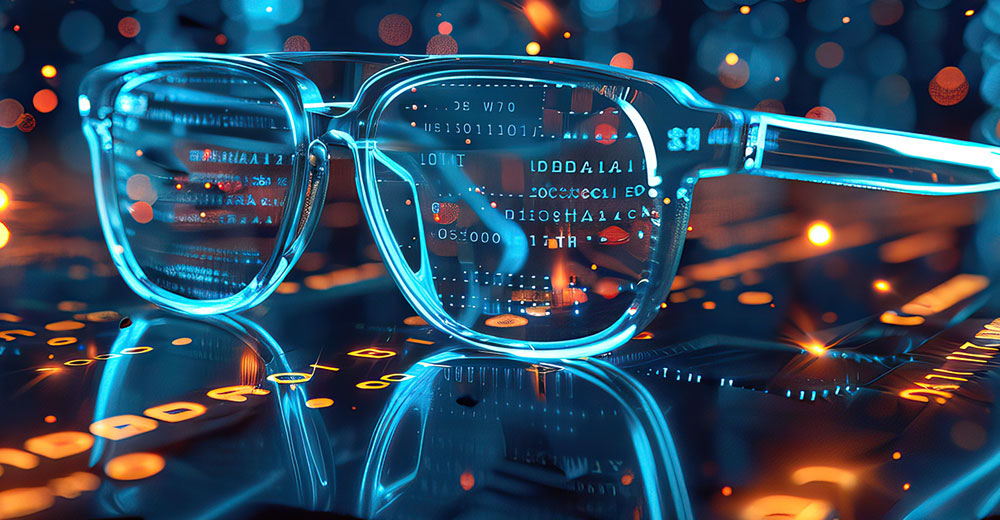
The true power of modern smart glasses lies in Multimodal AI—the ability to process video, audio, and text simultaneously. AI Tools for Creators News celebrates this for content generation, allowing influencers to livestream their lives seamlessly. However, for the bystander, it means that their face, voice, and context are being processed instantly.
Imagine a scenario involving AI Health & BioAI Gadgets News: a pair of glasses that can detect a person’s pulse via remote photoplethysmography (rPPG) simply by looking at their face. While beneficial for telemedicine, in a negotiation or a date, this asymmetry of information is ethically murky. Similarly, AI for Accessibility Devices News highlights how these glasses help the visually impaired navigate the world, a noble and necessary use case. The challenge lies in legislating the technology so that accessibility tools aren’t co-opted for non-consensual surveillance.
Cross-Industry Convergence
The technology driving smart glasses is also bleeding into other sectors. The sensors used are similar to those in Drones & AI News, allowing for obstacle avoidance. The battery efficiency techniques are shared with AI Fitness Devices News and AI Sleep / Wellness Gadgets News. Even AI Kitchen Gadgets News and AI Gardening / Farming Gadgets News are beginning to utilize computer vision to monitor cooking states or plant health. This convergence means that the supply chain for miniature cameras and AI processors is robust, driving down costs and making smart glasses more accessible—and thus more prevalent—than ever before.
Best Practices and Future Considerations
For the User: Etiquette and Responsibility
If you choose to adopt this technology, you become an ambassador for it. To avoid social friction and potential “glasshole” backlash, consider the following:

- Respect the LED: Never tamper with the recording indicator light. It is the only notice the public has.
- Context Awareness: Remove glasses in sensitive areas such as bathrooms, locker rooms, and secure office environments. This aligns with protocols often discussed in AI Office Devices News.
- Explicit Consent: When engaging in a long conversation, inform the other party if you are using AI features to transcribe or record.
For the Privacy Conscious: Awareness and Defense
For those concerned about being recorded, awareness is the first line of defense:
- Look for the Light: Most legitimate smart glasses will flash a small LED near the lens when capturing media.
- Reflective Checks: Using your phone’s flashlight to scan the face of someone wearing thick-rimmed glasses can reveal the retro-reflection of a camera lens.
- Bluetooth Scanners: There are mobile apps available that allow you to scan for nearby Bluetooth devices. An unusual density of unknown devices in a small room could indicate wearable tech.
The Regulatory Horizon
Governments are struggling to keep pace. AI for Energy / Utilities Gadgets News and AI Lighting Gadgets News are regulated for efficiency, but privacy regulation for wearables is lagging. We may soon see “No Smart Wearables” zones enforced by technology similar to that used in AI in Sports Gadgets News to protect broadcast rights. Venues might employ IR blasters that blind camera sensors without affecting the human eye, creating physical zones of privacy.
Conclusion
The narrative surrounding Smart Glasses News is far from black and white. These devices offer incredible potential to augment human intelligence, assist those with disabilities, and capture memories in high fidelity. They represent the pinnacle of AR/VR AI Gadgets News and the future of mobile computing. However, the rise of “Ray-Banned” style detection technologies highlights a critical societal friction.
As we move forward, the balance between the utility of AI Personal Robots News, AI Toys & Entertainment Gadgets News, and smart eyewear must be weighed against the fundamental right to privacy. Whether through Neural Interfaces News or simple optical sensors, the way we view the world—and how the world views us—has changed forever. The future will likely not be about banning the technology, but about developing a new social contract and technical safeguards that allow innovation and privacy to coexist.