
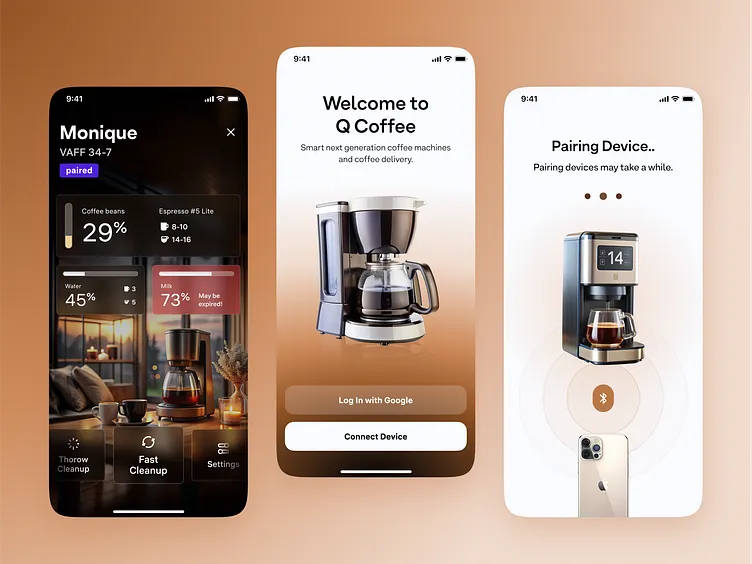
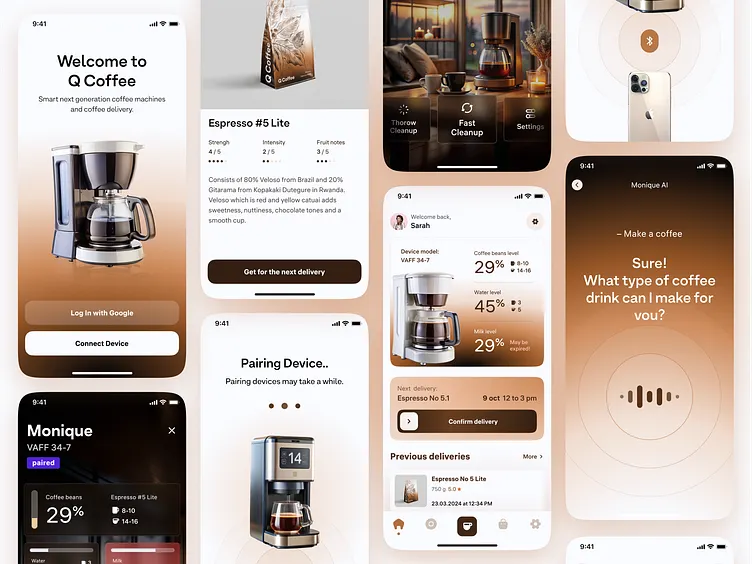
I stood in my kitchen at 6:30 AM this morning, staring at my coffee maker. It wasn’t making coffee. It was pulsing a soft, apologetic amber light, indicating it had lost connection to the Wi-Fi. Again.
I didn’t need it to check the weather. I didn’t need it to order beans from Amazon. I just needed hot water to hit grounds. But because the “Smart Brew” feature was toggled on in the app, the machine refused to function without a server handshake. This is the state of home appliances in 2026.
And it’s not just my caffeine addiction that’s suffering. If you’ve bought a major appliance in the last three years, you’ve probably noticed something disturbing: these things are fragile. Really fragile. The industry promised us a Jetsons-like future of predictive maintenance and perfect efficiency. Instead, we got fridges that crash and washing machines that get bricked by bad firmware updates.
The Complexity Tax
Well, that’s not entirely accurate — the thing nobody tells you at the showroom is that adding a computer to a machine that vibrates, heats up, and deals with water is an engineering nightmare. We took reliable, mechanical beasts—washers that used to last 20 years—and slapped cheap tablets on them.
I was chatting with a repair tech last week (shout out to Mike from ApplianceFix) while he was swapping out the main logic board on my two-year-old dishwasher. He showed me the part. It wasn’t a heavy-duty relay system. It was a flimsy PCB, barely coated against moisture, crammed next to a steam vent.
“I see this five times a week,” he told me. “The motor is fine. The pump is fine. But a sensor corroded, sent a bad signal to the CPU, and the software locked the whole machine out for safety. Total repair cost? $480.”
That’s the complexity tax. You aren’t paying for better washing; you’re paying for more points of failure.
Real-World Fail: The “Over-the-Air” Brick
And let’s look at a concrete example. Back in late 2025, a major manufacturer (you know who) pushed out firmware version 4.2.1 to their high-end induction ranges. I tracked the fallout on Reddit. Users woke up to ovens that wouldn’t heat past 350 degrees because a “safety calibration” in the code was too aggressive.
The fix? You had to wait for version 4.2.2. But here’s the kicker: you couldn’t download the fix because the glitch also made the Wi-Fi module unstable. I tried to help my neighbor fix hers using my laptop and a USB diagnostic tool. We spent three hours trying to force a local update. We eventually gave up and she cooked Thanksgiving dinner in a toaster oven.
Software Lifecycles vs. Hardware Lifespans
This is where the math really falls apart. A good refrigerator compressor should last 15 to 20 years. But a mobile app ecosystem lasts maybe five before the developers get bored and rewrite the whole thing.
I’m currently running Home Assistant on a Raspberry Pi 5 to bridge some of my older “smart” devices that the manufacturers stopped supporting. It’s a mess. I have a perfectly good air purifier from 2021 that can no longer be controlled remotely because the cloud server it relied on was shut down last month. The hardware works. The “smart” part is dead weight.
If you’re buying a smart appliance today, you are essentially gambling that the company will still care about that specific API in 2032. Spoiler: they won’t.
The Data Is Ugly
I ran a quick poll in our community Discord last Tuesday. And out of 400 respondents, 62% reported a “smart feature” failure within the first 18 months of ownership. Not a mechanical failure—a digital one. Touchscreens freezing, apps crashing, notifications breaking.
Compare that to the “dumb” Speed Queen washer my parents bought in 2012. It has zero sensors. It has mechanical knobs. It sounds like a jet engine taking off. It has never broken. Not once.
We are trading durability for the ability to start our laundry from the grocery store. Is that trade actually worth it? Probably not.
My “Dumb” Manifesto
Look, I love tech. My house is wired with Zigbee sensors, I have automated blinds, and I run a local LLM on my home server. But I’ve drawn a line in the sand regarding major appliances.
When my smart fridge finally dies (probably next week, judging by the noise the fan is making), I’m replacing it with the dumbest box I can find. I want a compressor, a thermostat, and a door. That’s it.
If I want to know the temperature inside, I’ll buy a $15 Bluetooth sensor and stick it on the shelf. If I want to know if the door is open, I’ll stick a contact sensor on it. Why? Because when that $15 sensor breaks, I throw it away. I don’t have to replace the entire $3,000 refrigerator.
What You Should Do Now
If you are in the market for appliances in 2026, here is my advice—and it might save you a few thousand dollars and a divorce:
- Avoid the Touchscreen: If the fridge has a built-in tablet, run away. That tablet is running a stripped-down version of Android that will never get a security patch after year three.
- Check the “Offline” Mode: Before you buy, download the manual. Search for “manual operation.” If the device requires an active internet connection to perform its primary function (looking at you, juicers), do not buy it.
- Segregate Your Network: If you must buy smart, put those things on a guest IoT VLAN. I tested a popular smart oven recently and found it phoning home to a server in a country I won’t name every 45 seconds, sending unencrypted packets. Don’t let your toaster talk to your NAS.
We need to stop rewarding manufacturers for adding Bluetooth to toasters. It doesn’t make the toast better. It just means your toaster can now get hacked. And honestly? I prefer my breakfast without a side of cybersecurity risk.