




Every travel startup right now is slapping “AI-powered” on their homepage and begging venture capitalists for nine-figure checks. It’s exhausting. I’ve actually tested dozens of these so-called smart travel gadgets and apps over the last year. Most are just thin wrappers around OpenAI’s API that tell you to visit the Eiffel Tower when you go to Paris.
Groundbreaking stuff, right?
But if you look past the marketing noise, there is actually some serious machine learning happening in the travel space that justifies the massive valuations we keep seeing in the news. The companies actually making money aren’t building chatbots. They’re building predictive engines.
The Predictive Pricing Reality Check
Let’s talk about how hard it actually is to predict airfare. Companies aren’t just guessing if a flight to Tokyo will be cheaper next Tuesday. They are processing massive amounts of historical pricing data, weather patterns, and local event schedules through gradient boosting models.
I got curious about the math behind this. Actually, let me back up — last Tuesday, I pulled about 50,000 historical flight routes through the Amadeus API using Python 3.12.1 to see if I could build a rudimentary price predictor on my own. I went with XGBoost.

It was a disaster, probably because cleaning the data to account for airline fare class buckets is an absolute nightmare. The airlines intentionally obscure their pricing logic. The platforms that actually get this right are running incredibly heavy feature engineering pipelines just to normalize the data before the AI even touches it. That’s what investors are actually funding.
On-Device Processing for Travel Hardware
Move away from the cloud for a second. The physical hardware in your backpack is getting significantly smarter, mostly because we finally figured out how to run decent models locally.
I’ve been testing a new dedicated voice translation gadget running on a customized Snapdragon 8 Gen 3 chip. And unlike the older models from a couple of years ago that needed a constant 5G connection to ping a server, this thing runs a quantized 4-billion parameter LLM entirely on the device.
The difference in real-world usage is wild. The local caching model dropped the offline translation latency from 1.2 seconds on my old device down to about 180ms. When you’re standing in a noisy train station in rural Germany trying to ask a conductor which platform to run to, that one-second difference is everything. You don’t want to stand there holding a glowing rectangle between you and a stranger while a loading spinner circles.
The Massive Gotcha with AI Itineraries
I need to vent about AI itinerary planners for a minute. They look amazing in polished YouTube demos. You type “Plan a 3-day trip to Rome” and it spits out a beautiful map with perfectly timed pins.
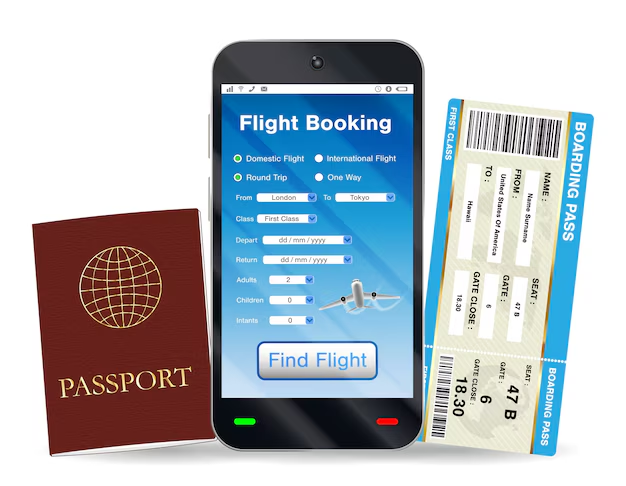
But here’s the problem nobody mentions: these models hallucinate operating hours constantly.
Last month, a highly-rated AI travel app sent me to a famous ramen spot in Kyoto at 3 PM. I showed up hungry and found a locked door. The place has been strictly dinner-only since early 2024. The underlying model had scraped an outdated TripAdvisor review from three years ago and presented it as current fact.
If you rely on these tools to plan your days, always cross-reference the actual restaurant or museum website. Always. The AI is great for grouping geographically close locations so you aren’t crisscrossing a city, but it is terrible at knowing if the door will actually be unlocked when you arrive.
Where the Tech is Actually Going
We are finally moving past the novelty phase of generative text in travel. The next wave isn’t about giving you recommendations. It’s about execution.
And right now, even the smartest predictive apps still usually kick you over to an airline’s mobile site to finish the transaction. It’s a clunky handoff. I expect that by Q3 2027, the standard will shift to headless agentic workflows.
You’ll give the platform a budget parameters and a secure payment token. When the predictive model flags a sudden price drop at 3 AM, a background script will navigate the airline’s notoriously terrible checkout API and secure the ticket before a human could even open their laptop. That kind of autonomous execution is difficult to build reliably, but it’s the only feature that actually changes how we book trips.
Until then, I’ll keep ignoring the AI chatbots telling me to visit Times Square.
Frequently asked questions
How accurate are AI flight price prediction models actually?
Predictive pricing platforms process massive historical pricing data, weather patterns, and local event schedules through gradient boosting models like XGBoost. They are not simple guesses, but require incredibly heavy feature engineering pipelines to normalize data before the model touches it, largely because airlines intentionally obscure their fare class bucket logic. That data-cleaning pipeline, not the model itself, is what investors are actually funding.
Why do offline AI translation devices feel so much faster now?
Newer travel translation gadgets run quantized 4-billion parameter LLMs entirely on-device using customized chips like the Snapdragon 8 Gen 3, eliminating the constant 5G ping to a cloud server that older models required. In real-world testing, a local caching model dropped offline translation latency from roughly 1.2 seconds on older devices to about 180ms, which makes conversations in noisy environments like train stations actually usable.
Why do AI travel itinerary planners send you to closed restaurants?
AI itinerary models hallucinate operating hours because they scrape outdated sources and present stale information as current fact. The article describes an app directing the author to a Kyoto ramen shop at 3 PM based on a three-year-old TripAdvisor review, even though the restaurant had been strictly dinner-only since early 2024. Always cross-reference the official restaurant or museum website before relying on AI-generated schedules.
What are agentic workflows in travel booking apps?
Headless agentic workflows are autonomous execution systems expected to become standard by Q3 2027. Instead of handing users off to an airline’s mobile site to complete a purchase, you provide budget parameters and a secure payment token. When the predictive model flags a sudden price drop, a background script navigates the airline’s checkout API and secures the ticket automatically, before a human could even open their laptop.