


Introduction
The landscape of global security and public safety is undergoing a seismic shift, driven by the convergence of artificial intelligence, robotics, and advanced biotechnology. We are moving beyond the era of simple motion detectors and CCTV cameras into a new age of “intelligent awareness.” In the realm of AI Security Gadgets News, the most compelling narrative currently unfolding is the development of autonomous systems capable of monitoring not just physical perimeters, but biological health and public safety parameters from a distance.
Imagine a scenario where security is no longer merely about preventing unauthorized access but about ensuring the biological well-being of a population. This concept, once the domain of science fiction, is rapidly becoming a reality through the innovation of specialized drones and smart sensors. These devices are being engineered to detect physiological anomalies—such as elevated body temperatures, erratic heart rates, or specific respiratory patterns—in crowded environments. As we delve into the latest Drones & AI News, we see a clear trend: the weaponization of data is being replaced by the “sanitization” of data, where algorithms are trained to protect communities from invisible threats.
This article explores the technical architecture, practical applications, and ethical implications of these next-generation security gadgets. We will examine how AI Sensors & IoT News intersects with robotics to create aerial platforms that serve as the first line of defense in health crises and public safety emergencies. From the integration of thermal imaging to the deployment of edge computing, we will dissect the anatomy of the modern bio-surveillance drone.
Section 1: The Anatomy of Bio-Surveillance Drones
Beyond the Flying Camera
To understand the magnitude of this innovation, one must look past the traditional form factor of a drone. In the context of Robotics News, a bio-surveillance drone is less of a flying camera and more of a flying laboratory. These devices are equipped with a multi-modal sensor fusion stack that allows them to perceive the world in spectrums invisible to the human eye. The core technology relies heavily on radiometric thermal sensors. Unlike standard thermal cameras used in Smart Home AI News for detecting heat leaks, these sensors are calibrated for human physiology, capable of detecting temperature variances as slight as 0.5 degrees Celsius from considerable distances.
Computer Vision and Behavioral Analysis
Hardware is only half the equation. The intelligence of these systems is derived from sophisticated machine learning models. AI Research / Prototypes News indicates that developers are training neural networks on vast datasets of human movement and physiological responses. This allows the drone not just to see a person, but to analyze their condition. For instance, computer vision algorithms can now identify specific physical behaviors associated with illness, such as coughing, sneezing, or the fatigue-induced gait often seen in individuals in distress.
This level of analysis requires immense processing power. To mitigate latency, these drones utilize AI Edge Devices News technologies. Instead of sending terabytes of video footage to a cloud server for analysis—which would be too slow for real-time alerts—the AI inference happens directly on the drone’s onboard computer. This ensures that if a potential health risk is identified, the alert is generated in milliseconds.
Integration with Smart Infrastructure
These aerial units do not operate in a vacuum. They are designed to integrate seamlessly with Smart City / Infrastructure AI Gadgets News. When a drone detects an anomaly, it communicates with ground-based IoT nodes. This could trigger a sequence of automated responses, such as alerting local medical teams, changing digital signage to advise crowds to disperse, or syncing with AI Monitoring Devices News systems in nearby buildings to prepare for potential intake. This connectivity transforms a single gadget into a node within a massive, intelligent security grid.
Section 2: The Ecosystem of Intelligent Monitoring
From Aerial to Terrestrial: The Holistic Security Grid
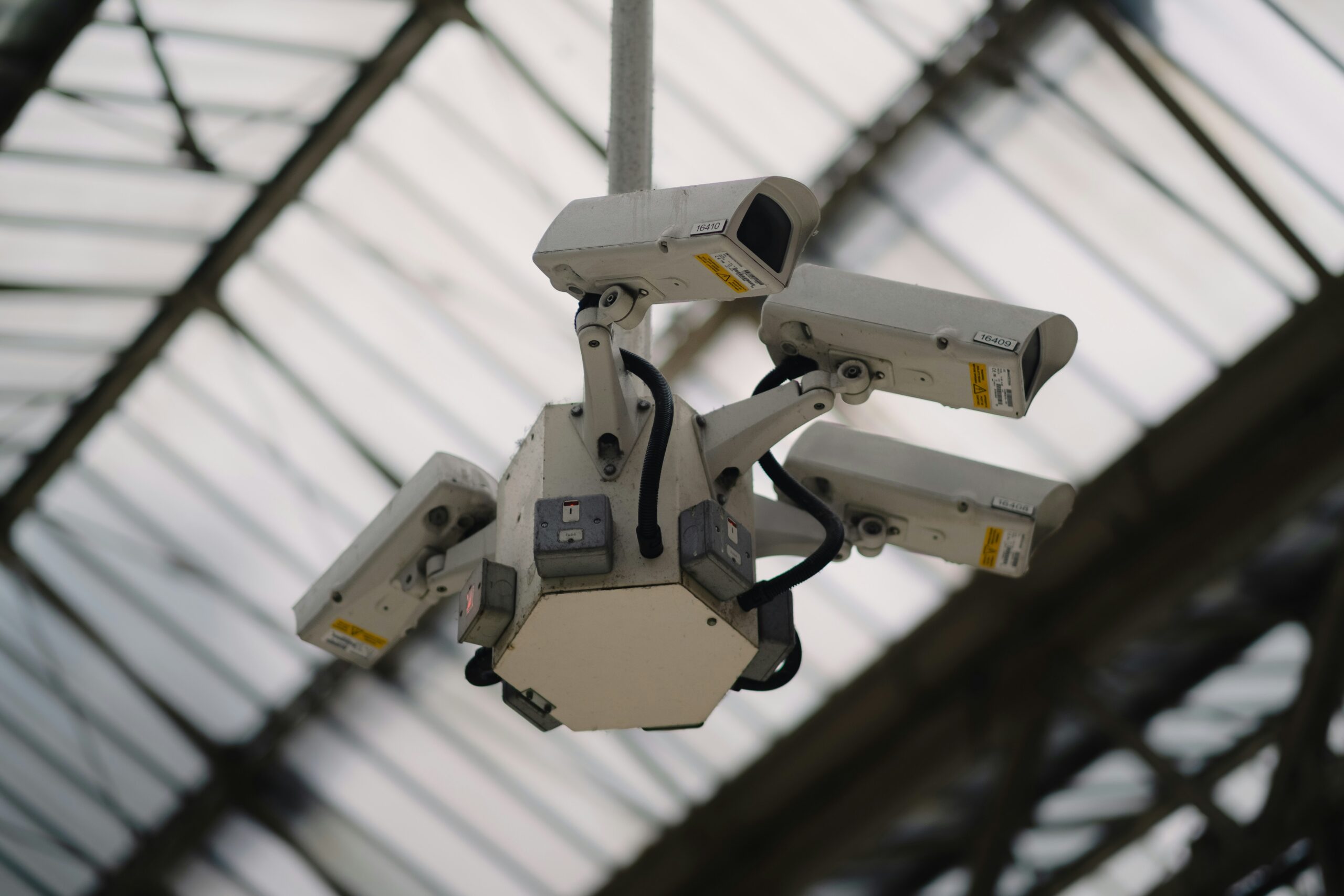
While drones patrol the skies, the ground game in AI security is equally evolving. The technology powering bio-surveillance drones is trickling down into AI Cameras News and stationary security devices. We are witnessing the rise of “smart kiosks” and robotic gatekeepers that utilize the same thermal and vision technologies to screen individuals entering office buildings, airports, or shopping centers. This connects directly to AI Office Devices News, where the modern workplace is being retrofitted with touchless, AI-driven access control systems that verify identity and health status simultaneously.
Wearables and the Personal Security Loop
The synergy between external security gadgets and personal devices is tightening. Wearables News and Health & BioAI Gadgets News are becoming integral parts of the security conversation. In a fully realized smart ecosystem, a bio-surveillance drone might not just alert a central command; it could theoretically communicate with an individual’s smartwatch to advise them that they are exhibiting symptoms of fever, prompting them to check their own health data. This intersection of AI Phone & Mobile Devices News and public security creates a feedback loop where public safety and personal wellness monitoring converge.
Robotics on the Ground
It is not just drones taking up the mantle of surveillance. AI Personal Robots News and Robotics Vacuum News might seem unrelated, but the navigation and obstacle avoidance technologies are shared. More pertinent are the autonomous ground vehicles (AGVs) patrolling perimeters. These “security rovers” are now being outfitted with the same bio-sensors as their aerial counterparts. In AI in Gardening / Farming Gadgets News, we see similar rovers monitoring crop health; the translation of this logic to human health monitoring in public parks is a natural evolution of the technology.
Case Study: The Smart Campus
Consider a university campus implementing AI Education Gadgets News alongside security tech. A network of drones could patrol the quad during flu season. If a cluster of students shows elevated temperatures, the system tags the location. This data doesn’t just alert security; it informs the facility managers (relevant to AI for Energy / Utilities Gadgets News) to increase ventilation in specific buildings or deploy AI Cleaning Robots to sanitize the area. This demonstrates how security data becomes utility data, optimizing the environment for health.
Section 3: Implications, Challenges, and the Future of AI Security
The Privacy Paradox
The deployment of such powerful surveillance tools inevitably raises significant privacy concerns. In the world of AI Security Gadgets News, the line between safety and intrusion is thinner than ever. Detecting a fever is different from detecting a weapon; it involves collecting biometric data without explicit consent. As we discuss Neural Interfaces News and deeper integration of tech into biology, the question arises: who owns the data regarding your body temperature when you walk down a public street? Regulatory frameworks are currently struggling to keep pace with AI Tools for Creators News and developers who are building these capabilities faster than laws can be written.
Technical Limitations and False Positives
Despite the hype in Technews, the technology is not infallible. Thermal sensors can be tricked by environmental factors—a hot coffee cup, intense sunlight, or physical exertion (relevant to AI in Sports Gadgets News) can lead to false positives. A drone misidentifying a jogger as a feverish patient could lead to unnecessary panic or harassment. Therefore, the “human in the loop” remains critical. These gadgets should be viewed as triage tools, not diagnostic devices. They flag potential issues for human verification rather than making autonomous decisions.
The Role of Edge Computing and 5G
The efficacy of these systems relies heavily on connectivity. The rollout of 5G is a major catalyst for AI Edge Devices News. High-bandwidth, low-latency networks allow multiple drones to coordinate in swarms, sharing data in real-time to cover large areas without redundancy. This is also vital for Autonomous Vehicles News, which may eventually share sensor data with security drones to create a comprehensive map of city activity. Without robust connectivity, the AI cannot function at the speed required for effective security.
Broader Applications: Beyond Health
While health is the current driver, the utility of these drones extends to other sectors. In AI for Travel Gadgets News, similar tech is used to streamline airport flows. In AI for Accessibility Devices News, computer vision developed for security is being repurposed to help the visually impaired navigate complex environments by identifying obstacles and crowd density. Even AI Pet Tech News benefits, as the tracking algorithms used to monitor humans are adapted to locate lost pets in urban environments.
Section 4: Pros, Cons, and Strategic Recommendations
![AI chatbot user interface - 7 Best Chatbot UI Design Examples for Website [+ Templates]](https://aigadget-news.com/wp-content/uploads/2025/12/inline_5c057094-scaled.jpg)
Pros of AI Bio-Surveillance
- Rapid Detection: AI can process visual and thermal data thousands of times faster than a human guard, identifying risks instantly.
- Non-Contact Safety: Drones and remote sensors allow security personnel to monitor situations without physical proximity, reducing the risk of infection or conflict.
- Data-Driven Insights: The aggregation of data helps city planners and security firms understand patterns, leading to better resource allocation—a key topic in AI Research / Prototypes News.
- Scalability: A fleet of drones can cover a massive area that would require hundreds of human guards, offering a cost-effective solution for large venues.
Cons and Risks
- Privacy Erosion: The potential for “mission creep,” where health data is used for tracking or profiling, is high.
- High Initial Cost: Implementing a fleet of thermal-equipped, AI-driven drones involves significant capital expenditure, comparable to high-end Smart Appliances News investments but on an industrial scale.
- Technical Fragility: Reliance on complex software stacks means that bugs, hacks, or sensor failures can compromise the entire security apparatus.
- Public Trust: Without transparency, the presence of surveillance drones can induce anxiety rather than a sense of safety.
Recommendations for Implementation
For organizations looking to adopt these technologies, a balanced approach is essential. First, transparency is key. Using AI Assistants News interfaces to inform the public about what data is being collected and why can mitigate backlash. Second, data minimization strategies should be employed—processing data at the edge (on the drone) and discarding video feeds once no threat is detected ensures privacy by design. Finally, integration is crucial. These gadgets should not stand alone but should be part of a wider ecosystem involving Smart Glasses News for security staff and AI Lighting Gadgets News for automated environmental responses.
Conclusion
The emergence of bio-surveillance drones represents a pivotal moment in AI Security Gadgets News. We are witnessing the fusion of Robotics News, advanced sensor technology, and artificial intelligence to create a security layer that is proactive rather than reactive. While the inspiration often stems from health crises, the application of this technology will fundamentally reshape how we secure our cities, borders, and public spaces.
From the integration with Smart Home AI News to the broader implications for Smart City / Infrastructure AI Gadgets News, the connected world is becoming more aware of its inhabitants. As we move forward, the challenge will not be in the engineering—innovations in AI Research / Prototypes News prove that the capability exists—but in the ethical stewardship of these powerful tools. If navigated correctly, this technology promises a future where security gadgets do not just watch us, but actively work to keep us healthy and safe.