




Introduction: The Shift from Prototype to Platform
The narrative surrounding autonomous mobility has shifted dramatically in recent years. We have moved past the initial hype cycle—where the promise was a sudden, overnight switch to driverless utopias—into a more pragmatic, yet technologically profound phase of deployment. The latest Autonomous Vehicles News suggests that the future of transportation is not just about the vehicle itself, but about the massive computing architecture powering it and the networks that manage it.
We are currently witnessing the dawn of the “hybrid era.” This is a transitional period where human-driven ride-hailing services are increasingly integrated with autonomous capabilities. Rather than a winner-take-all battle between robotaxi startups and legacy automakers, we are seeing the emergence of bridge solutions. Major mobility platforms are evolving into aggregators, deploying mixed fleets that utilize advanced AI architectures—often powered by giants like NVIDIA—to optimize routing, safety, and energy consumption. This article explores the technical underpinnings of this shift, the rise of the “AI supercomputer on wheels,” and how the convergence of Robotics News and mobility is reshaping our cities.
Section 1: The Silicon Brain – NVIDIA and the AI Architecture of Mobility
At the heart of modern autonomous vehicle (AV) development lies a fundamental truth: a self-driving car is essentially a high-performance edge computing device. The industry is rapidly coalescing around centralized compute architectures that can handle the massive data throughput required for Level 4 and Level 5 autonomy.
From Distributed ECUs to Centralized Compute
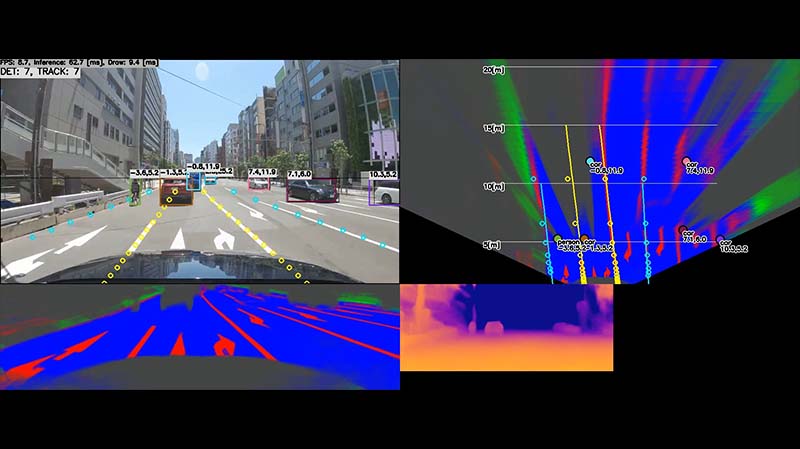
Historically, cars operated with dozens of distributed Electronic Control Units (ECUs), each managing a specific function like braking or steering. However, AI Edge Devices News highlights a paradigm shift toward centralized architecture. Modern AVs utilize powerful Systems-on-Chip (SoCs), such as the NVIDIA DRIVE platform, which acts as the centralized brain of the vehicle. This consolidation is critical because it allows for sensor fusion—the real-time merging of data from cameras, LiDAR, and radar.
This architectural shift mirrors trends seen in Smart City / Infrastructure AI Gadgets News, where centralized data processing is required to manage complex traffic flows. By centralizing compute power, AVs can process trillions of operations per second (TOPS), enabling them to distinguish between a pedestrian, a cyclist, and a plastic bag drifting in the wind with superhuman accuracy.
The Role of Simulation and Digital Twins
Before an autonomous vehicle ever hits the pavement, it has likely driven millions of miles in the metaverse. AI Research / Prototypes News indicates that companies are increasingly relying on high-fidelity simulation environments. These “digital twins” allow AI models to train against rare edge cases—such as a child running out from behind a truck in a snowstorm—without risking physical safety. This reliance on synthetic data generation is a trend also seen in AI Tools for Creators News, where generative AI builds virtual worlds. In the context of AVs, this technology ensures that the software stack is mature before deployment, bridging the gap between theoretical robotics and real-world application.
Section 2: The Platform Economy and Bridge Solutions
While the technology matures, the business model of autonomy is also evolving. The concept of a “bridge solution” is becoming central to the strategy of major ride-hailing networks. We are unlikely to see a sudden flip where all human drivers are replaced. Instead, we are entering a decade of hybrid networks.
The Aggregator Model
The most viable path to mass adoption lies in utilizing existing ride-share networks as the deployment layer for AVs. In this model, a platform can dispatch a human driver for a complex route (like a pickup in a crowded construction zone) and deploy an autonomous vehicle for a standard route (like a highway trip to the airport). This dynamic allocation maximizes fleet efficiency.
This mirrors developments in AI Monitoring Devices News, where systems intelligently allocate resources based on need. By treating AVs as just one asset class within a broader network, companies can maintain service reliability while gradually scaling up their autonomous fleets. This strategy mitigates the risk of “robotaxi burnout,” where expensive assets sit idle because they cannot handle specific geofenced limitations.
Economic Implications of the Hybrid Fleet
The economics of this transition are fascinating. An autonomous vehicle is capital-intensive upfront due to the cost of sensors—a topic frequently covered in AI Sensors & IoT News—but offers lower operating costs over time. Human drivers offer low capital expenditure but higher variable costs. A hybrid network balances these factors. Furthermore, as AI for Energy / Utilities Gadgets News suggests, the integration of electric AVs into these fleets allows for optimized charging schedules, interacting with the smart grid to charge when electricity is cheapest, further driving down the cost per mile.
Section 3: The Passenger Experience and the “Third Living Space”
As vehicles take over the task of driving, the interior of the car is being reimagined as a “third living space,” distinct from the home and the office. This transformation is turning the cabin into a hub for various consumer technologies, drawing heavily from Smart Home AI News and entertainment sectors.
Productivity and Entertainment on the Go
With the steering wheel eventually becoming optional, the focus shifts to in-cabin experiences. We are seeing the integration of technologies typically found in AI Office Devices News. Imagine attending a holographic meeting via AR/VR AI Gadgets News integration while commuting, or utilizing AI Assistants News to manage your schedule before you arrive at the office. The vehicle becomes a mobile extension of the workspace.
Conversely, for leisure, the integration of high-fidelity audio and visual systems is paramount. AI Audio / Speakers News is relevant here, as AVs are adopting active noise cancellation and spatial audio to create immersive theater experiences. AI in Gaming Gadgets News also intersects, as passengers can engage in low-latency gaming sessions powered by the vehicle’s onboard GPU, which, when not processing road data (e.g., while parked or charging), can be repurposed for entertainment.
Health, Safety, and Accessibility
The autonomous cabin is also becoming a health pod. AI-enabled Cameras & Vision News are not just for looking at the road; they are looking at the passengers. Interior sensors can monitor vital signs, detecting medical emergencies like heart attacks or fatigue. This convergence with Health & BioAI Gadgets News means the car could reroute itself to a hospital if a passenger becomes unresponsive.
Furthermore, AVs represent a massive leap forward for accessibility. AI for Accessibility Devices News highlights how self-driving tech can liberate the elderly and the visually impaired. Voice-activated interfaces and haptic feedback systems allow those who cannot drive to regain independent mobility.
Section 4: The Broader Ecosystem – From Drones to Smart Kitchens
Autonomous vehicle technology does not exist in a vacuum. It is part of a broader ecosystem of automation that touches every aspect of modern life. The sensor stacks and path-planning algorithms used in cars are shared across various domains.
Shared Tech Stacks: From Vacuums to Tractors
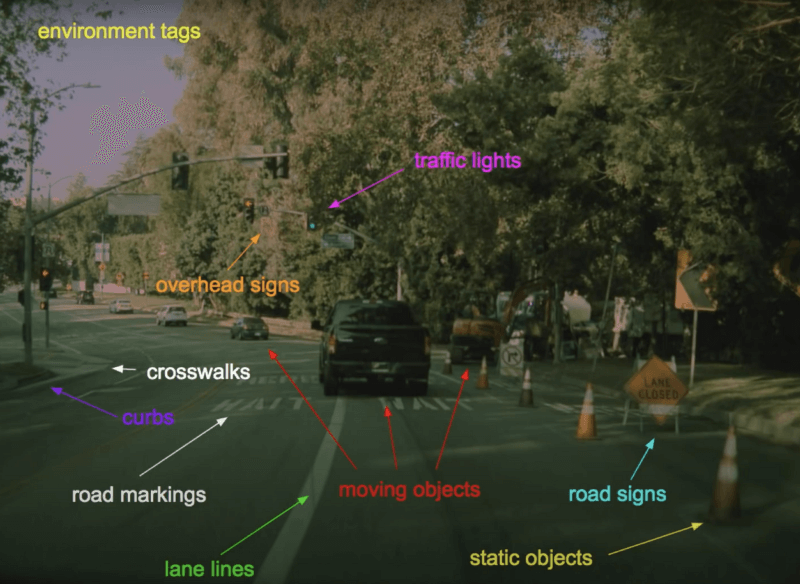
The SLAM (Simultaneous Localization and Mapping) technology that guides a robotaxi is fundamentally similar to the tech discussed in Robotics Vacuum News. Both devices must map an environment and navigate it without collision. Similarly, AI Gardening / Farming Gadgets News reveals that autonomous tractors use similar NVIDIA-based architectures to navigate fields, identifying weeds versus crops with computer vision.
This cross-pollination extends to logistics. Drones & AI News frequently covers the “last mile” delivery problem. In the future, an autonomous van might deploy a fleet of delivery drones or sidewalk robots (a staple of AI Personal Robots News) to carry packages from the curb to the doorstep. Even AI Kitchen Gadgets News is relevant, as automated food preparation systems in “ghost kitchens” are being designed to hand off meals directly to autonomous delivery pods, creating a human-free supply chain from skillet to consumer.
Security and Privacy Considerations
With great connectivity comes great vulnerability. AI Security Gadgets News is increasingly focused on the automotive sector. If a car is a computer, it can be hacked. Ensuring the cybersecurity of AV fleets is paramount, especially when they are connected to AI Phone & Mobile Devices News ecosystems. Manufacturers are implementing biometric authentication—similar to tech found in Wearables News—to ensure that only authorized users can command the vehicle or access its data.
Unexpected Applications: Pets and Fitness
The versatility of AVs leads to niche applications. AI Pet Tech News discusses the potential for “pet taxi” modes, where climate control and internal cameras allow owners to send their pets to the vet or groomer unaccompanied, monitored remotely via smartphone. Similarly, AI Fitness Devices News and AI in Sports Gadgets News are exploring concepts where mobile gyms (autonomous pods equipped with exercise gear) come to the user, allowing them to work out during their commute.
Section 5: Challenges and Best Practices for the Transition
Despite the optimism, the road to full autonomy is paved with challenges. Navigating the transition requires a focus on safety, regulation, and public trust.
The “Uncanny Valley” of Automation
One of the biggest risks is the “handoff” problem in semi-autonomous systems. AI Sleep / Wellness Gadgets News research suggests that humans are poor at regaining focus once their attention has drifted. If a Level 3 vehicle asks a driver to take over in an emergency, the reaction time may be too slow. Best practices now dictate that bridge solutions should lean towards Level 4 (high automation in specific areas) rather than Level 3, or utilize robust driver monitoring systems (DMS) to ensure alertness.
Infrastructure Integration
For AVs to succeed, they must communicate with their environment. Smart City / Infrastructure AI Gadgets News emphasizes the need for V2X (Vehicle-to-Everything) communication. Traffic lights, AI Lighting Gadgets News (smart streetlamps), and road sensors must broadcast data to vehicles to extend their “line of sight” beyond what onboard sensors can see. Cities investing in this digital infrastructure will be the first to unlock the full economic benefits of autonomous mobility.
Recommendations for Industry Stakeholders
- Focus on Hybrid Deployment: Do not wait for Level 5 perfection. Utilize mixed fleets to gather data and generate revenue now.
- Prioritize Sensor Fusion: Relying on a single sensor modality (like cameras only) is risky. A robust suite including LiDAR and Radar provides necessary redundancy.
- Embrace Open Architectures: Proprietary, walled gardens slow down innovation. Leveraging scalable platforms allows for faster software iterations.
- Design for the Passenger: As driving becomes passive, the in-cabin experience (entertainment, work, rest) becomes the primary product differentiator.
Conclusion
The integration of autonomous vehicles into our daily lives is no longer a question of “if,” but “how.” The industry is moving away from the wild speculation of the past toward a grounded, architectural approach. By leveraging powerful AI compute platforms, adopting hybrid fleet models, and integrating with the broader ecosystem of Robotics News and IoT, we are building a transportation network that is safer, more efficient, and surprisingly versatile.
From the silicon chips processing terabytes of data to the AI Tools for Creators News used to simulate virtual test tracks, every facet of the technology sector is converging on the car. As we bridge the gap between human-driven and fully autonomous networks, the vehicle transforms from a simple machine into an intelligent companion—a node in a vast, interconnected digital city. The future of mobility is not just about moving from point A to point B; it is about the intelligent, seamless experience that happens in between.