



Let’s be honest: nobody likes the orange box.
You know the one I’m talking about. That clunky, highly visible (or sometimes sneakily hidden) radar unit sitting on the side of the highway. It’s a relic. For decades, we’ve played a cat-and-mouse game with these things. You see Waze light up, you slam on the brakes, you pass the box at exactly the speed limit, and then you accelerate back up to your “real” cruising speed. It’s a stupid dance that doesn’t actually improve safety; it just creates dangerous braking waves.
I’ve been tracking the rollout of enforcement technology for years, and I’m telling you right now: that dance is ending. The transition we are seeing right now—specifically the massive infrastructure overhauls scheduled for completion by 2026 in places like the Middle East and parts of Europe—signals the end of instant speed detection. The future is average speed enforcement, powered by AI that sees a lot more than just your license plate.
This isn’t just a minor upgrade. It’s a fundamental shift in how we monitor public spaces, and while the safety arguments are compelling, the privacy implications keep me up at night.
The Tech Stack: Radar vs. Vision
To understand why this shift is happening, you have to look at the hardware limitations of the old guard. Traditional speed cameras, often housed in those iconic orange housings, rely mostly on Radar or Lidar (Light Detection and Ranging). They shoot a beam, measure the Doppler shift or time-of-flight, and calculate your velocity at a single specific point in time and space.
I’ve taken apart some of these older units for hobby projects (don’t ask where I got them), and they are surprisingly dumb. They trigger a camera shutter when a threshold is breached. If you are speeding 100 meters before the camera but slow down right in front of it, the machine is none the wiser.
The new wave of AI Cameras News isn’t about measuring a single point. It’s about measuring time over distance. The physics is simple: $Speed = Distance / Time$. If you pass Camera A at 10:00:00 and Camera B (which is 10 kilometers away) at 10:05:00, the system calculates your average speed over that entire segment.
But here is where the tech gets interesting. To make this work at scale across an entire country’s highway network, you need incredibly robust Automatic License Plate Recognition (ALPR).
Why AI is Essential Here
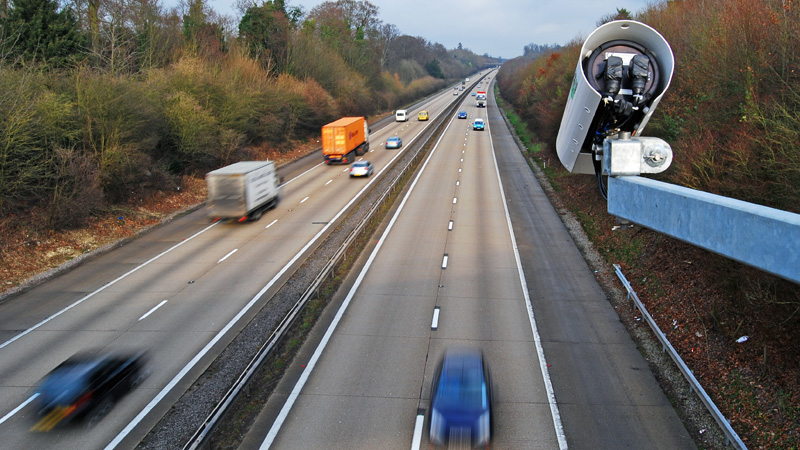
Old school ALPR was terrible. I remember working with optical character recognition (OCR) software back in the day that would confuse a ‘B’ for an ‘8’ if there was even a speck of mud on the plate. It relied on hard-coded geometric rules—looking for high contrast edges that looked like letters.
The systems rolling out now, which I’ve seen detailed in recent AI-enabled Cameras & Vision News, use deep learning models, specifically Convolutional Neural Networks (CNNs) and increasingly Vision Transformers. These aren’t “reading” the plate in the traditional sense; they are recognizing the vehicle’s identity in a holistic way.
I’ve tested some open-source versions of these models on my own home server. They don’t just look for text. They analyze the make, model, and color of the car simultaneously to cross-reference the plate reading. If the OCR thinks the plate says “ABC-123” but the database says that plate belongs to a red Ford, and the camera sees a blue Toyota, the AI flags the anomaly instantly. This level of verification is what allows governments to automate the ticketing process without human review, drastically lowering the cost of enforcement.
The Infrastructure of Compliance
I look at these new installations—often sleek, grey or black poles rather than bulky boxes—and I see a network, not a standalone tool. The shift we are witnessing in 2025 involves replacing standalone units with a mesh of connected sensors.
In the context of Smart City / Infrastructure AI Gadgets News, this is a massive efficiency play. The old cameras required expensive calibration and often physical film collection or dedicated hard lines. The new AI units process data at the edge.
Here is my understanding of the workflow based on current specs:
1. Edge Processing: The camera captures video (not just stills) and the onboard AI chip (likely an NVIDIA Jetson or similar industrial accelerator) extracts the vector data of the vehicle and plate.
2. Data Transmission: Instead of sending heavy video files, it sends a tiny text packet containing the plate string, timestamp, and location hash over 5G.
3. Cloud Matching: The central server matches the entry hash with the exit hash from the next camera down the road.
4. Verification: If the calculated speed exceeds the limit, the system pulls the high-res snapshot that was buffered locally on the camera and transmits it for the ticket.
This architecture reduces bandwidth costs by 99%. It makes the system cheap enough to blanket every highway, not just the dangerous curves.
The Safety Argument (and Why It Actually Works)
I can be cynical about government tech, but I have to give credit where it’s due: average speed cameras actually work for safety. I drive through a section of highway near my city that switched to this system last year. The “braking waves” are gone.
When you know your speed is being averaged over 20 kilometers, you just set your cruise control and chill out. The traffic flows smoother. The aggressive acceleration and deceleration disappear. From a traffic engineering perspective, it’s brilliant. It harmonizes the flow.
However, calling this a “life-saving game-changer” feels like marketing fluff. It’s effective, yes. But let’s look at the other side of the coin, which often gets buried in the AI Security Gadgets News.
The Privacy Trade-off
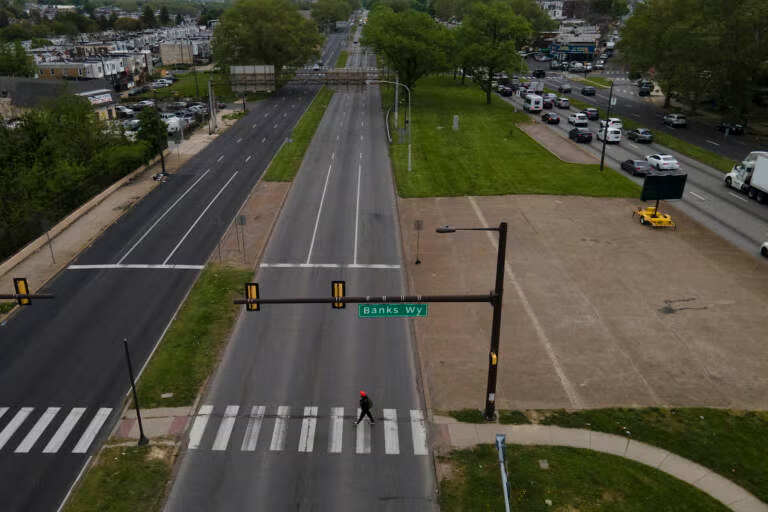
This is the part that bothers me. When you replace a spot-speed camera with an average-speed network, you are inadvertently building a mass surveillance tool.
To calculate average speed, the system must log every single car that passes Camera A, regardless of whether they are speeding or not. You cannot know if someone sped until they reach Camera B. This means the system is creating a timestamped log of the location of every single driver on that road segment.
I’ve asked developers working in AI Monitoring Devices News about data retention policies, and the answers are usually vague. “We delete non-infringing data immediately,” they say. But “immediately” is a flexible term in database architecture. Is it deleted after the calculation? After 24 hours? After a backup cycle?
Furthermore, the metadata these AI cameras collect is rich. They aren’t just seeing plates. They are seeing:
* Seatbelt usage (yes, the resolution is that high now).
* Phone usage while driving.
* Passenger count.
I suspect that by 2027, we will see these cameras being used not just for speed, but for automated distracted driving enforcement and even occupancy verification for HOV lanes. The capability is already there in the hardware being installed today; it’s just a software switch away.
The Financial Motivation
Let’s not pretend this is purely altruistic. I’ve analyzed municipal budgets where these systems are implemented. The ROI (Return on Investment) is staggering.
Traditional police patrols are expensive. Officers need salaries, pensions, cars, and insurance. An AI camera on a pole costs a fraction of that and works 24/7 without coffee breaks. By automating the entire chain—from detection to mailing the fine—the state turns traffic enforcement into a passive income stream.
In regions like Israel, where the orange cameras are being phased out for this new tech by 2026, the initial capital expenditure is high. But the operational expenditure is minimal. I view this as a “money grab” only if the speed limits are set artificially low. If the limits are reasonable, it’s just efficient tax collection on stupidity. But it certainly changes the dynamic between the citizen and the state. You aren’t being caught by a person; you’re being processed by an algorithm.
Integration with Autonomous Tech
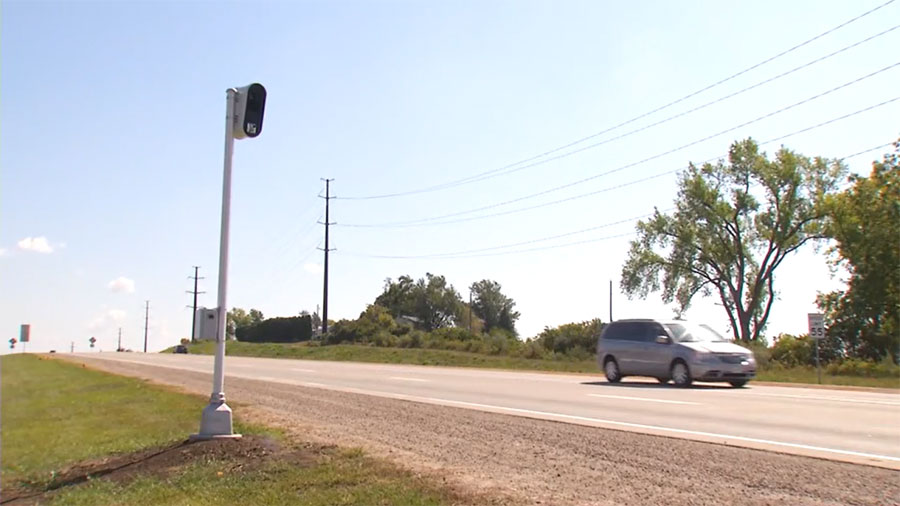
I’m also looking at how this interfaces with Autonomous Vehicles News. We are inching closer to a world where the car and the road talk to each other.
If I’m driving a Level 3 or Level 4 autonomous car, does it communicate with these enforcement gantries? Theoretically, if my car is self-driving, it shouldn’t speed. But if the AI camera misreads the situation, who gets the ticket? Me, or the software manufacturer?
I foresee a future where your car’s internal telemetry can be used to dispute the external camera’s reading. “Your camera says I averaged 120km/h, but my black box logs show a max of 110km/h.” This data battle is going to be the new traffic court.
What This Means for You
If you are reading AI Phone & Mobile Devices News, you might be thinking, “Can’t I just use an app to beat this?”
The answer is increasingly “no.” Waze and Google Maps are great at telling you where the cameras are. But with average speed zones, knowing where the camera is doesn’t help you unless you plan to pull over to the shoulder and wait out the clock (which defeats the purpose of speeding).
I’ve tried to find loopholes. I’ve looked into AI Sensors & IoT News to see if there are jammers or obfuscation techniques. Apart from illegal plate covers (which the AI is getting better at flagging, by the way), there is no technical workaround. The math wins.
The Road Ahead
As we head into 2026, the landscape of our highways is physically changing. The bright orange warnings are fading, replaced by discreet, omniscient eyes.
I find myself torn. As a tech enthusiast, I admire the engineering. The ability to track millions of objects in real-time, process the data at the edge, and enforce laws with mathematical precision is a feat of modern computer science. It falls squarely into the most impressive developments in AI Edge Devices News.
But as a driver and a privacy advocate, I feel the walls closing in. The freedom of the open road is being replaced by a managed corridor of compliance. We are trading the chaotic, human nature of driving for a sterilized, optimized transport grid.
My advice? If you live in a region undergoing this upgrade, stop looking for the cameras. They are becoming part of the infrastructure itself. Just set your cruise control, put on a podcast, and accept that the era of getting away with it is over.
Just make sure you keep asking your local representatives exactly how long they keep that data. Because while speeding tickets are annoying, a permanent database of your movements is a much higher price to pay.