





Introduction: The Golden Age of Portable High-Fidelity
For decades, the audio industry operated under a strict dichotomy: convenience versus quality. Audiophiles clung to wired connections, massive over-ear cans, and dedicated amplifiers, scoffing at the compression artifacts inherent in Bluetooth technology. Meanwhile, the general consumer market embraced the freedom of wireless earbuds, accepting muddy bass and shrill highs as the price of admission for cutting the cord. However, we are currently witnessing a paradigm shift that is obliterating this trade-off.
The latest generation of premium wireless audio devices is no longer choosing between hardware excellence and software intelligence—it is merging them. We are seeing the miniaturization of high-end speaker technologies, such as planar magnetic drivers and multi-way speaker architectures, previously reserved for studio monitors and luxury headphones. Simultaneously, the integration of Neural Processing Units (NPUs) and advanced algorithms is ushering in an era of “Computational Audio.”
This fusion is reshaping the landscape of AI Audio / Speakers News, transforming humble earbuds into sophisticated Wearables News headlines. These devices are no longer just passive receivers of sound; they are active, intelligent participants in how we perceive the world. From real-time language translation to adaptive equalization that adjusts to the shape of your ear canal 50,000 times a second, the modern earbud is a marvel of engineering. This article delves deep into the technical advancements driving this revolution, specifically focusing on the marriage of advanced driver hardware with AI-driven signal processing.
Section 1: The Hardware Renaissance in Miniature Audio
To understand the leap in audio quality, we must first look at the physical components. Software can enhance sound, but it cannot fix fundamental physical limitations. The most significant recent trend is the move away from single dynamic drivers toward complex, hybrid driver architectures within the tiny chassis of a truly wireless stereo (TWS) earbud.
The Rise of 2-Way Speaker Systems
In traditional high-fidelity home audio, you rarely see a single speaker cone trying to reproduce the entire frequency spectrum (20Hz to 20kHz). Instead, you have a woofer for low frequencies and a tweeter for high frequencies. This separation allows each driver to be optimized for its specific task, reducing intermodulation distortion—a muddiness that occurs when a single diaphragm tries to thump a bass drum and shimmer a cymbal simultaneously.
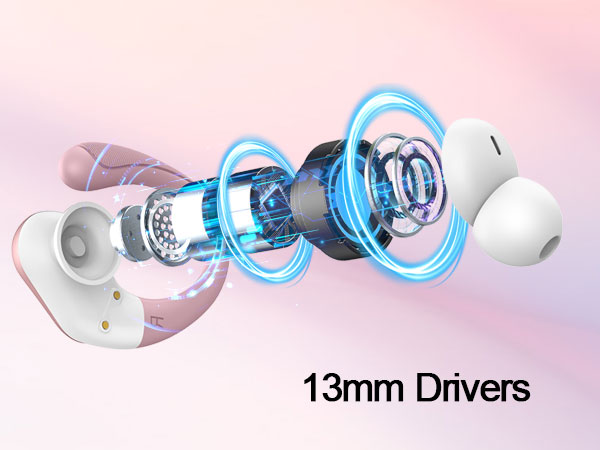
Recent advancements in micro-manufacturing have allowed engineers to implement 2-way speaker systems into earbuds. By dedicating a dynamic driver to bass and mids, and a separate driver for treble, manufacturers can achieve a level of separation and clarity previously impossible in this form factor. This hardware evolution is a critical topic in AI Phone & Mobile Devices News, as smartphone manufacturers race to bundle these high-spec peripherals with their flagship handsets.
Planar Magnetic Tweeters: Precision at the Micro Scale
Perhaps the most exciting development in the realm of AI Audio / Speakers News is the integration of planar magnetic technology. Unlike dynamic drivers, which use a voice coil to push a cone back and forth, planar drivers use a flat, ultra-thin diaphragm suspended between magnetic fields. When electricity passes through the diaphragm, it moves uniformly across its entire surface.
Why does this matter? Transient Response. Planar drivers are incredibly light and fast. They can start and stop moving almost instantly, resulting in exceptional detail retrieval and zero “overhang” or blur in high-frequency sounds. Historically, planar drivers were large, heavy, and power-hungry. Seeing them miniaturized as tweeters in wireless earbuds represents a massive engineering breakthrough. This allows for crystal-clear vocals and intricate instrument separation that rivals wired in-ear monitors (IEMs).

Dual Amplifiers: Powering the Beast
High-end drivers require precise power delivery. A single amplifier driving a hybrid speaker system can lead to interference and lack of dynamic range. The solution, borrowed from high-end Hi-Fi setups, is Dual Amplification. By assigning a dedicated amplifier to the woofer and another to the planar tweeter, the system ensures that the power-hungry bass doesn’t starve the delicate treble of energy. This results in a sound profile that remains distortion-free even at high volumes, a feature that is increasingly highlighted in AI Toys & Entertainment Gadgets News for immersive gaming experiences.
Server rack GPU – Brand New Gooxi 4u Rackmount case ASR4105G-D12R AMD Milan 7313 Cpu …
Section 2: The Brain Behind the Sound – AI and Computational Audio
While hardware provides the muscle, Artificial Intelligence provides the finesse. The integration of AI into audio chipsets is transforming earbuds from simple transducers into intelligent AI Edge Devices News.
Adaptive EQ and ANC: The Personalized Soundscape
Every human ear is shaped differently, and the seal of an earbud tip varies every time you put it in. Traditional audio profiles are static, but AI-driven Adaptive EQ analyzes the microphone feedback inside the ear canal to adjust bass and treble performance in real-time. If the seal is loose, the AI boosts the bass to compensate for leakage.
Furthermore, Active Noise Cancellation (ANC) has evolved from a simple frequency inversion to a complex, scene-aware system. Utilizing machine learning models trained on thousands of environmental sounds, modern earbuds can distinguish between the hum of an airplane engine and the sudden cry of a baby. This connects deeply with AI for Travel Gadgets News, where travelers demand silence without missing critical announcements. The AI can automatically switch to “Transparency Mode” when it detects a siren or when the user starts speaking, a feature often discussed in AI Assistants News.
Super-Wideband Speech and AI Reconstruction
Voice call quality has long been the Achilles’ heel of Bluetooth audio. However, the introduction of Super-Wideband (SWB) speech protocols, aided by AI, is changing this. Using AI Sensors & IoT News technologies, earbuds now utilize bone conduction sensors to detect jaw movement, separating the user’s voice from background wind or crowd noise. Deep learning algorithms then reconstruct missing frequencies in the voice data, making calls sound as if the speakers are in the same room. This is vital for the AI Office Devices News sector, where clear communication is non-negotiable.
Real-Time Translation and the AI Companion
The most futuristic application of this technology is the “Babel Fish” reality. With the rise of on-device AI, earbuds are becoming the primary interface for real-time language translation. By pairing with a smartphone, the earbuds can listen to a foreign language and whisper the translation into the user’s ear with minimal latency. This convergence of AI Education Gadgets News and audio tech is breaking down communication barriers globally.
Section 3: Implications, Connectivity, and the Ecosystem
The synergy between advanced hardware and AI software extends beyond sound quality; it reshapes how these devices fit into our lives and the broader Internet of Things (IoT).
The Codec War and High-Res Transmission
Advanced hardware like planar tweeters is useless if the Bluetooth transmission compresses the music file too much. This has led to the development of high-bitrate codecs (like LDAC, AptX Lossless, and proprietary scalable codecs). These codecs require robust processing power to decode efficiently without draining the battery—a balancing act managed by the device’s AI power management unit. This is a recurring theme in Smart Home AI News, where seamless high-fidelity streaming across devices is the goal.
Auracast and Shared Audio Experiences
The introduction of Bluetooth LE Audio and Auracast is revolutionizing public audio. Imagine walking into a gym and tapping your earbuds to tune into the TV on the wall, or sitting in a lecture hall and receiving the audio feed directly to your ears. This technology, often covered in AI for Accessibility Devices News, assists the hearing impaired while offering convenience to the general public. It transforms earbuds into AI Monitoring Devices News tools that can selectively tune into relevant public broadcasts.
Health Monitoring and BioAI
The ear is an excellent location for biometric monitoring. Future iterations of premium earbuds are expected to include sensors for heart rate, body temperature, and even blood oxygen levels. This merges the audio industry with Health & BioAI Gadgets News. AI algorithms can analyze this data to detect stress levels or sleep patterns (for sleep buds), providing wellness coaching directly through the audio stream. We are seeing the early stages of this in AI Fitness Devices News, where earbuds provide real-time coaching feedback based on biometric data.
Section 4: Recommendations and Real-World Scenarios
With the market flooded with options, understanding the technical specifications is crucial for consumers and enterprise buyers alike. Here is how these advancements apply to different user scenarios.
For the Audiophile and Creator
If you are consuming high-resolution audio or editing content on the go (relevant to AI Tools for Creators News), prioritize devices with 2-way speakers and planar tweeters. The separation of frequencies ensures that you hear the mix accurately. Look for support for 24-bit/96kHz audio transmission. The dual amplifier setup is essential here to ensure dynamic peaks are handled without distortion.
For the Smart Home and Office User
For those deeply integrated into a smart ecosystem, look for “ecosystem continuity.” This involves auto-switching capabilities that move audio seamlessly from your phone to your tablet or laptop. AI Personal Robots News and Robotics Vacuum News might seem unrelated, but as home robots gain voice interfaces, your earbuds will likely become the command center for these devices. Ensure your earbuds support multi-point connection and have advanced VPU (Voice Pickup Units) for clear commands.
For the Athlete and Explorer
In the realm of AI in Sports Gadgets News, durability and fit are paramount. However, the AI aspect is critical for safety. Look for “Adaptive Transparency” features that use AI to amplify ambient sounds (like cars) while suppressing wind noise. This is also relevant to AI Security Gadgets News, as maintaining situational awareness is a key safety feature.
Pros and Cons of the New Tech Stack
Pros:
- Unprecedented Clarity: Planar tweeters reveal details in music previously lost in wireless transmission.
- Intelligent Noise Control: AI adapts to the environment better than static filters.
- Health Integration: The convergence with AI Sleep / Wellness Gadgets News adds utility beyond music.
Cons:
- Battery Life: Dual amplifiers and heavy AI processing consume more power. While efficiency is improving, high-fidelity modes often reduce playtime.
- Cost: The inclusion of planar drivers and advanced NPUs drives up the price point.
- Complexity: Users may find the array of settings and “smart features” overwhelming without a well-designed companion app.
Conclusion
The narrative of wireless audio has shifted from “good enough” to “exceptional.” The integration of advanced hardware components like planar tweeters and dual amplifiers, driven by sophisticated AI algorithms, has created a new category of device that satisfies both the audiophile’s ear and the tech enthusiast’s desire for smart features.
As we look to the future, the lines between AI Audio / Speakers News, AR/VR AI Gadgets News (where spatial audio is key), and Neural Interfaces News will continue to blur. The earbud is evolving into a comprehensive hearable computer—a discreet, powerful assistant that enhances not just how we hear music, but how we interact with the world, our health, and our digital ecosystems. For consumers, there has never been a better time to listen.